
How to Find Out Who Owns a Domain Name in 2026: 5 Step Methods
Finding who owns a domain name requires checking ICANN WHOIS lookup tools, inspecting website contact pages, reaching out to domain registrars, or hiring domain brokers in October 2026. Follow our domain lookup guide to identify and contact domain owners legally.
Featured visual highlights domain ownership lookup methods, ICANN WHOIS lookup tools, and domain broker contact workflows for October 2026.
Finding out who owns a domain name is a critical research step for entrepreneurs seeking to acquire registered domain names, investigate copyright infringement, or report malicious web spam.
Every domain name registered on the internet contains administrative record details stored within global WHOIS databases.
While privacy protection services often redact personal registrant names and phone numbers under GDPR privacy regulations, alternative lookup techniques allow buyers to locate domain owner contact channels.
Combining ICANN lookup tools with domain registrar relay services enables contacting domain owners safely.
Evaluating domain lookup methods requires analyzing ICANN WHOIS search engines, registrar abuse contact forms, reverse IP lookups, and specialized domain broker acquisition services.
Review our tested 5-step domain ownership lookup guide for October 2026 below.
Utilizing verified domain lookup procedures helps buyers negotiate domain purchases efficiently while respecting privacy regulations.
Understanding domain lookup frameworks empowers business owners to protect brand trademarks and secure premium domain assets.
5 Domain Ownership Lookup Methods Summary Matrix for 2026
Comparing domain lookup techniques clarifies research accuracy, privacy bypass success, and technical effort requirements. Review the summary matrix below to select domain lookup methods matching your domain acquisition budget.
| Domain Lookup Method | Primary Data Source | Contact Success Rate |
|---|---|---|
| 1. ICANN WHOIS Search | Central ICANN WHOIS Directory | High (If Privacy Disabled) |
| 2. Website Inspection | Live Site Contact & About Pages | Very High (Active Sites) |
| 3. Registrar Relay Contact | Domain Registrar Relay Form | Medium (Anonymized Email) |
| 4. Domain Broker Agent | Professional Broker Outreach | Highest (Paid Service) |
Detailed Breakdown: 5 Ways to Find Domain Ownership Details
Applying structured domain lookup steps increases your chances of establishing direct communication with domain owners. Explore each research method below to locate domain contact information.
Combining multiple lookup techniques helps bypass WHOIS privacy redactions legally.
Systematically checking WHOIS databases and web archives ensures no potential contact lead is overlooked.
1. Performing an ICANN WHOIS Lookup Search
An ICANN WHOIS lookup queries central domain databases to display registration dates, registrar details, nameservers, and registrant contact records. Visiting lookup.icann.org and typing your target domain name retrieves official registry data within seconds.
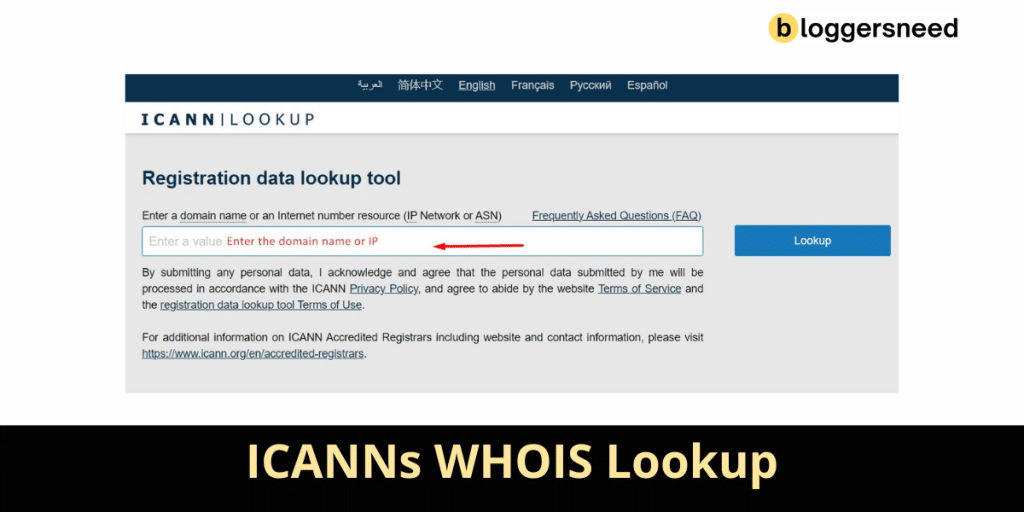
ICANN WHOIS lookup tool interface displays domain registration dates, nameserver host records, and registrar details.
Inspecting WHOIS results reveals the exact domain registrar (e.g. GoDaddy or Namecheap) handling the domain account.
Checking creation and expiration timestamps helps buyers calculate domain age and anticipate upcoming expiration dates.
If WHOIS privacy is disabled, the record displays the owner’s full name, administrative email address, and phone number.
Using command-line WHOIS tools on desktop terminal windows provides instant access to raw registry data.
2. Visiting the Target Website & Checking Contact Pages
Visiting the target domain directly allows inspecting live homepage layouts, contact forms, footer copyright notices, and About Us pages. Active websites frequently publish business email addresses and corporate entity names directly on public contact pages.
Checking website footer text often reveals parent company names, registered business addresses, and phone numbers.
Submitting an inquiry through on-site contact forms routes messages directly to website administrators.
Inspecting Privacy Policy or Terms of Service pages discloses corporate entity names and legal registration addresses.
Checking copyright year statements in website footers clarifies whether the website is actively maintained by owners.
3. Contacting the Designated Domain Registrar Relay Service
Domain registrars provide web-based email relay forms allowing third parties to send messages to domain owners anonymously. Registrars forward your message to the registrant’s private email address without exposing personal contact details.
Navigating to the registrar’s WHOIS contact page allows submitting messages through authorized forwarding relays.
Phrasing inquiry messages professionally increases the likelihood that domain owners respond to anonymous relay emails.
Including clear purchase offer details or contact information encourages domain owners to reply directly.
Using registrar relay forms maintains compliance with global data protection and privacy regulations.
Registrar contact forms provide an essential communication channel when WHOIS records are completely redacted.
4. Searching Social Media Profiles & Domain History Archives
Searching social media platforms like LinkedIn, Twitter, and Facebook using brand keywords uncovers company founders and domain owners. Reverse WHOIS history databases also index historical WHOIS records created before privacy protection was enabled.
Searching LinkedIn for domain brand names identifies current founders, CEOs, and webmasters managing the domain.
Historical WHOIS databases like Whoisology display older unredacted contact records from prior registration years.
Wayback Machine internet archives reveal historical website pages that published unredacted contact information.
Cross-referencing social media profiles helps confirm domain owner identity before making purchase offers.
Checking corporate registration databases confirms active business owner names and legal contact addresses.
5. Hiring a Professional Domain Broker Agent
Hiring a professional domain broker provides expert negotiation and confidential outreach to domain owners. Domain brokers utilize private industry networks to locate domain owners and negotiate acquisition terms on your behalf.
Domain brokers at platforms like Sedo, GoDaddy Domain Brokerage, or Grit Brokerage handle owner contact confidentially.
Professional brokers protect buyers from overpaying by evaluating fair market domain values prior to outreach.
Securing domain escrow services through brokers guarantees safe transfer of funds upon domain ownership transfer.
Brokerage representation increases acquisition success rates when dealing with high-value premium domains.
Experienced brokers navigate owner negotiations efficiently, protecting buyers from inflated pricing demands.
Why Do People Search for Domain Owners?
Identifying domain search reasons helps researchers choose appropriate lookup methods.
Defining clear acquisition goals prevents wasting time on dormant domains with unresponsive owners.
- Domain Acquisition: Buyers seek to purchase registered domains for brand launches or domain investments.
- Trademark & Legal Disputes: Brand owners investigate potential trademark infringement or cybersquatting.
- Cybersecurity Reporting: Security teams report malware hosting, phishing pages, or spam abuse to domain owners.
- Partnership Outreach: Digital marketers reach out to explore business partnerships, guest posts, or advertising deals.
Frequently Asked Questions About Finding Domain Owners
Frequently asked questions regarding domain owner identification address WHOIS directory queries, privacy protection bypasses, registrar relay contact forms, historical ownership archives, and lookup costs. Review verified ownership answers in this reference section.
How do I find out who owns a domain name?
The most reliable method to find a domain owner is running a query on ICANN Lookup or Whois.com. These directory tools report the registrar, registration dates, technical contacts, and publicly listed administrative email addresses associated with the target domain.
Public records allow prospective buyers to verify whether the domain is managed by a private registrant or corporate entity.
Why are many domain owners hidden in WHOIS lookups?
Most domain registrars provide free WHOIS privacy protection, replacing personal registrant details with proxy proxy services to comply with GDPR privacy regulations and prevent email harvesting. In these cases, the lookup shows privacy proxy contact information instead.
Privacy services safeguard website owners against automated spam lists, telemarketing calls, and unauthorized identity scraping.
How can I contact a domain owner if WHOIS privacy is active?
When WHOIS privacy masks direct contact information, reach the owner via the anonymized relay email address displayed in the WHOIS record. Alternatively, submit inquiries through the domain registrar’s official contact form or check the website contact page directly.
Registrar relay gateways automatically forward legitimate inquiries directly to the hidden registrant email inbox.
Can I find a domain owner’s identity through historical records?
Yes, historical WHOIS archiving tools like DomainTools, Whoisology, and Wayback Machine often reveal registrant names and contact details recorded before privacy protection was enabled. Historical DNS changes and past SSL certificate entries also provide identity clues.
Evaluating historic DNS records frequently uncovers early registration data before proxy masking was implemented.
Is domain ownership information completely free to look up?
Basic current WHOIS lookups are 100 percent free via ICANN Lookup, Whois.com, and registrar lookup portals. Advanced investigative platforms that provide comprehensive historical WHOIS records, ownership tracking alerts, and reverse IP lookups generally require paid subscriptions.
Free portals provide sufficient technical data for most domain acquisition inquiries and ownership confirmation needs.

I’m Abdullah Prem, a passionate blogger with over 10 years of experience. I created BloggersNeed to produce high-quality, easy-to-understand articles, guides, and tutorials that help people start their blogging journey. Specializing in WordPress, Hosting, Themes, and online money-making strategies, I’ve been featured on leading tech platforms such as Tech.co, Cloudways, Business2Community, Leadpages, GoodFirms, and ShareThis. BloggersNeed.com