Most AI content writers promise speed and quality—but rarely deliver both.
Scalenut blends AI-powered writing with robust SEO tools, making it easier to create and optimize content in one place.
We’ve tested its article generation, keyword planning, and workflow features to see where it stands out—and where it falls short.
In this review, you’ll discover if Scalenut fits your team’s needs, and how it can sharpen your content marketing strategy.
Table of Contents
What is Scalenut and What it Does?
Scalenut is an AI-driven content and SEO platform. Its core is the proprietary GEO engine, which powers its automation.
Scalenut’s workflow covers several stages.
- Generates long-form blog posts using AI and NLP.
- Creates SEO-focused outlines based on top-ranking pages.
- Performs keyword clustering and topic research.
- Suggests NLP keywords to improve topical relevance.
- Helps rewrite, expand, or optimize existing content.
- Turns AI content to human like content.
- Supports content planning, briefs, and workflow automation.
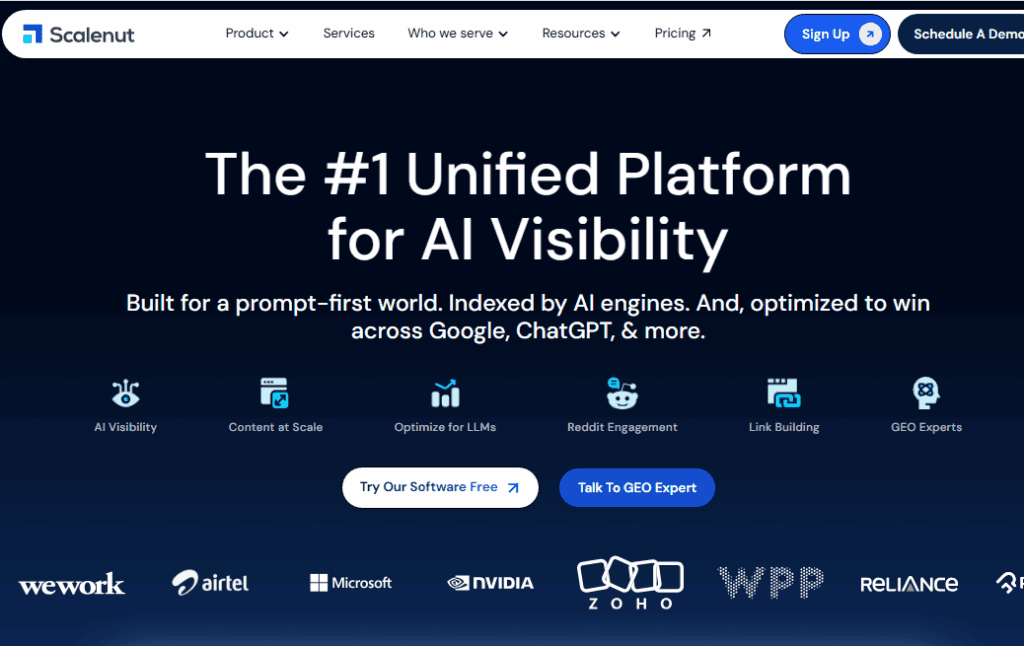
Key Features and Capabilities
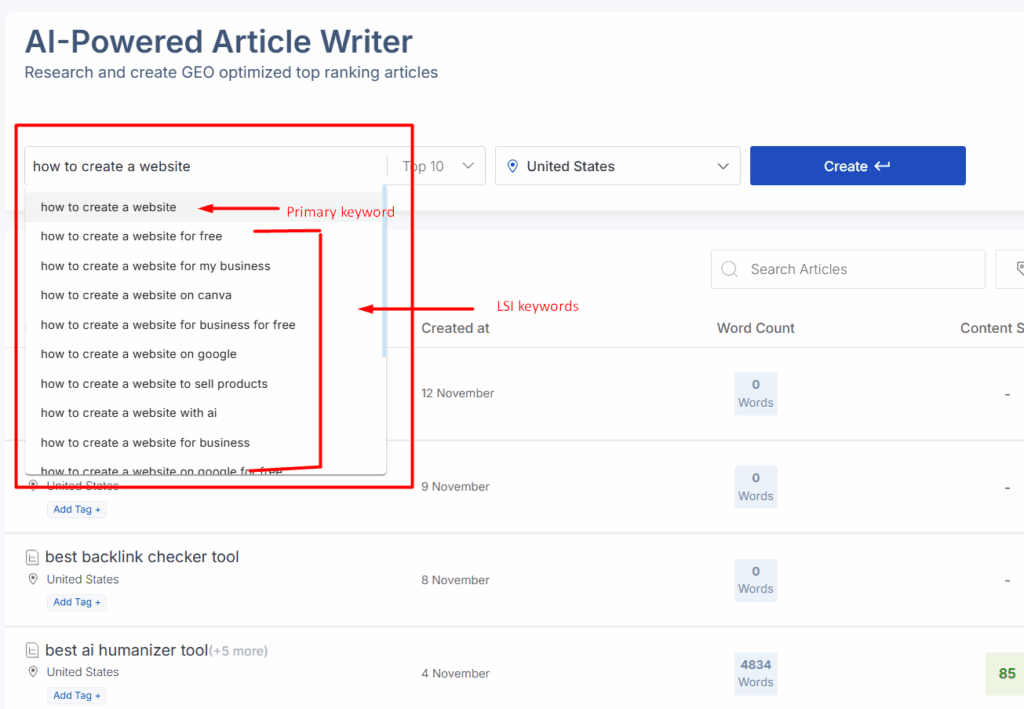
Scalenut’s Article Writer speeds up content creation. You can generate long-form articles quickly. I’ve found the interface guides you step by step.
The AI-Powered Article Writer screen got:
- Box to enter the keyword for article
- Select the country
- Choose the top 10 websites to extract information
Using the above setting you can generate optimized article.
For example, I entered “how to create a website” in the keyword box, and it provided me with related keywords that I can include in my article or use to write a separate article.
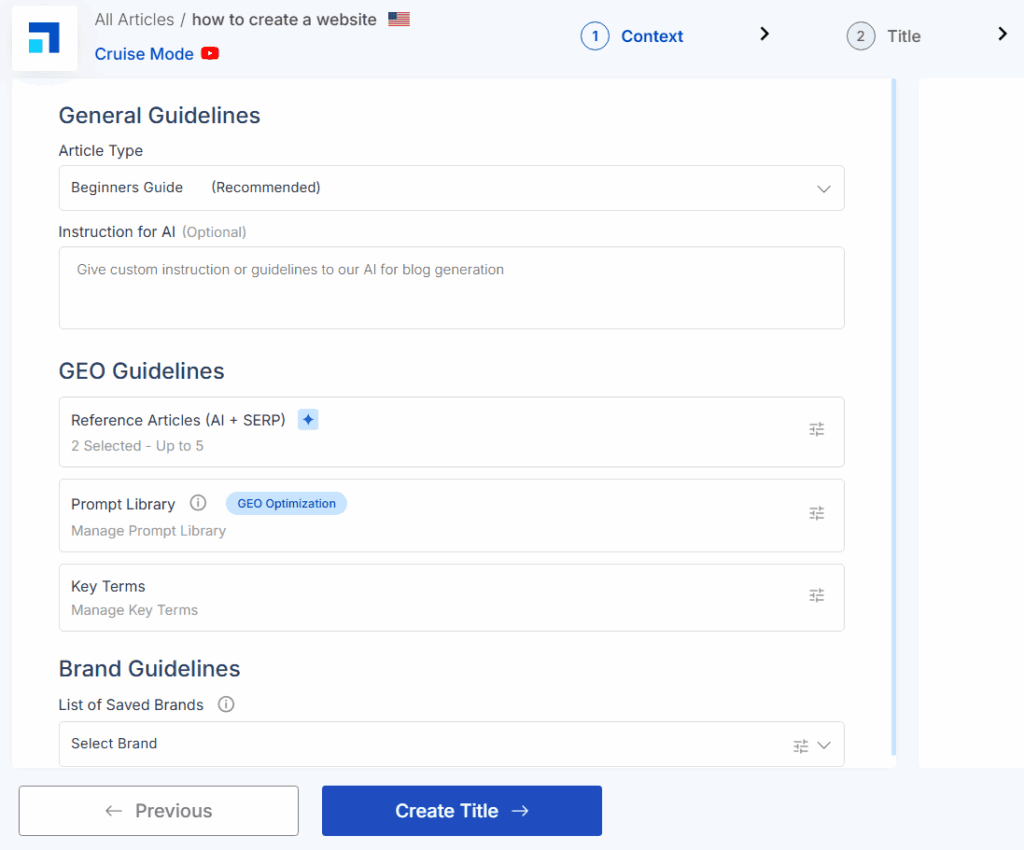
After clicking the Create button, it enters to cruise mode.
The Cruise mode provides quick choices for drafting the article.
- Context
- Title
- Outline
- First draft
The first step in content creation from Scalenut is the context part.
In context screen:
- I can select the article type such as general, beginners guide, affiliate or listicle.
- Give custom instructions or guidelines for AI for article generation.
- Select articles from AI visibility and SERP as reference to write GEO optimized content.
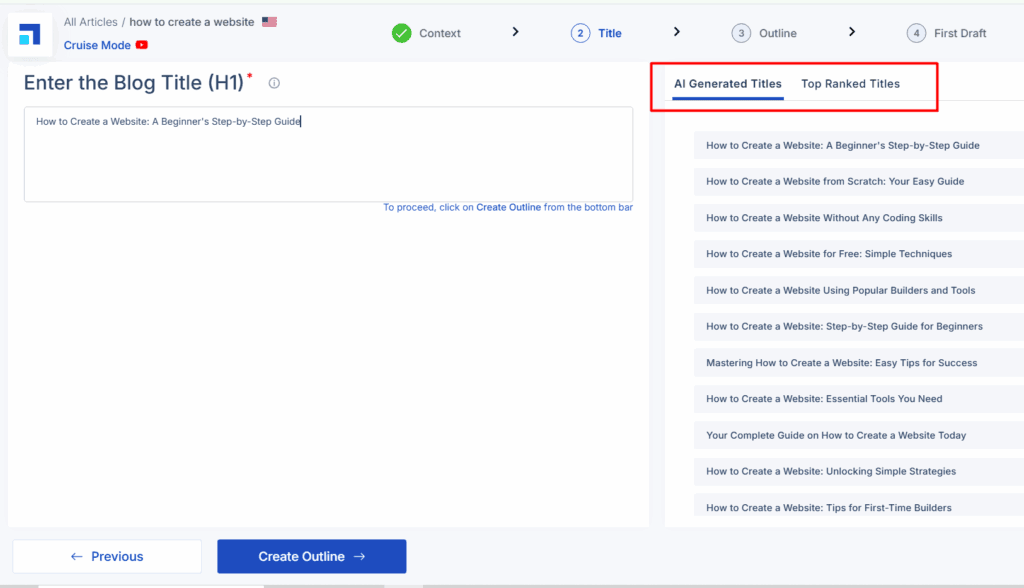
Next is selecting title for the blog post.
It got three options:
- Manually enter H1 for my blog post
- Choose AI generated titles
- Select the title from the top ranked website
From the options above, I will choose 2 or 3 titles from top-ranked websites and enhance them to achieve higher CTR and rankings.
In this Scalenut review, i’m going to show you the coolest part.
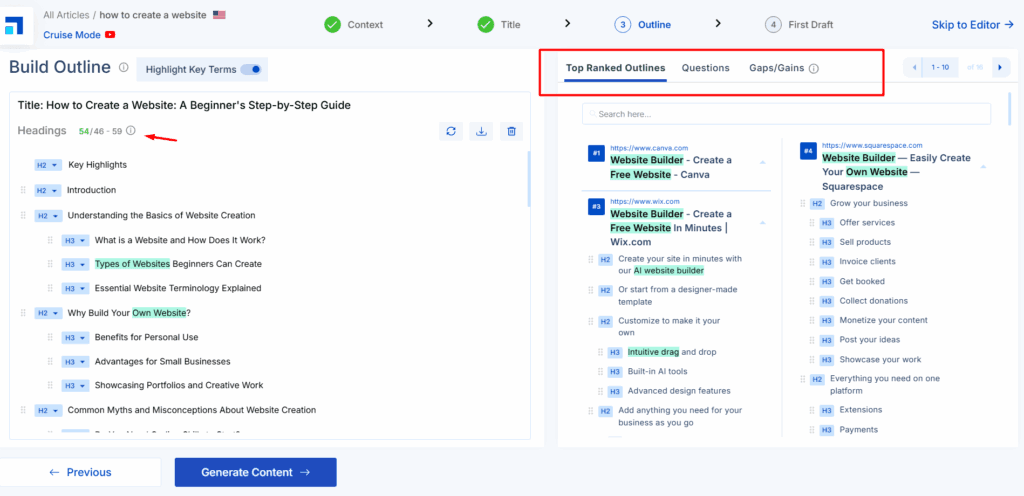
It’s the Scalenut’s outline builder.
The Scalenut outline builder builds optimized headers for my blog post.
With one click, it scrapes headers from top-ranked websites and generates a perfect outline from H2 to H6 with frequently asked questions at the bottom.
On the right side, it shows the headings, questions, and content gaps and gains, and you can drag and drop those headings to the left side to build your own custom outline.
After generating the content from Scalenut AI, it saves article as draft.
Scalenut generates quality blog post content, but manual optimization is needed for improved on-page SEO.
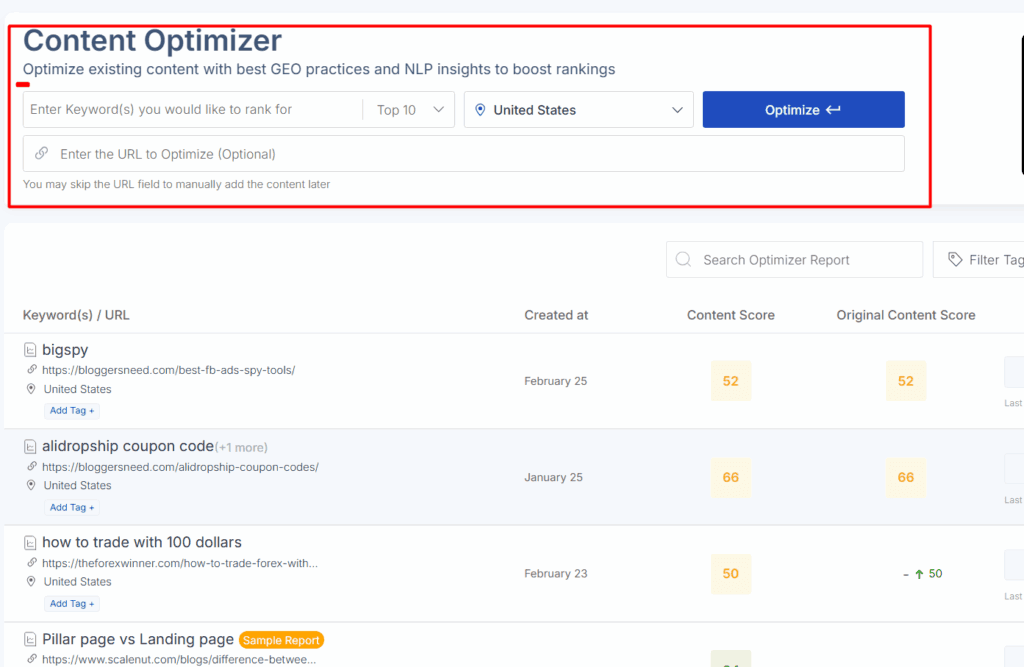
The Content Optimizer focuses on on-page SEO quality. It benchmarks your drafts against top-ranking pages. You get actionable recommendations for keywords, structure, and readability.
To optimize content:
- Enter keywords you would like to rank for
- Enter the URL to Optimize
- Choose the top competitors
- Select the location
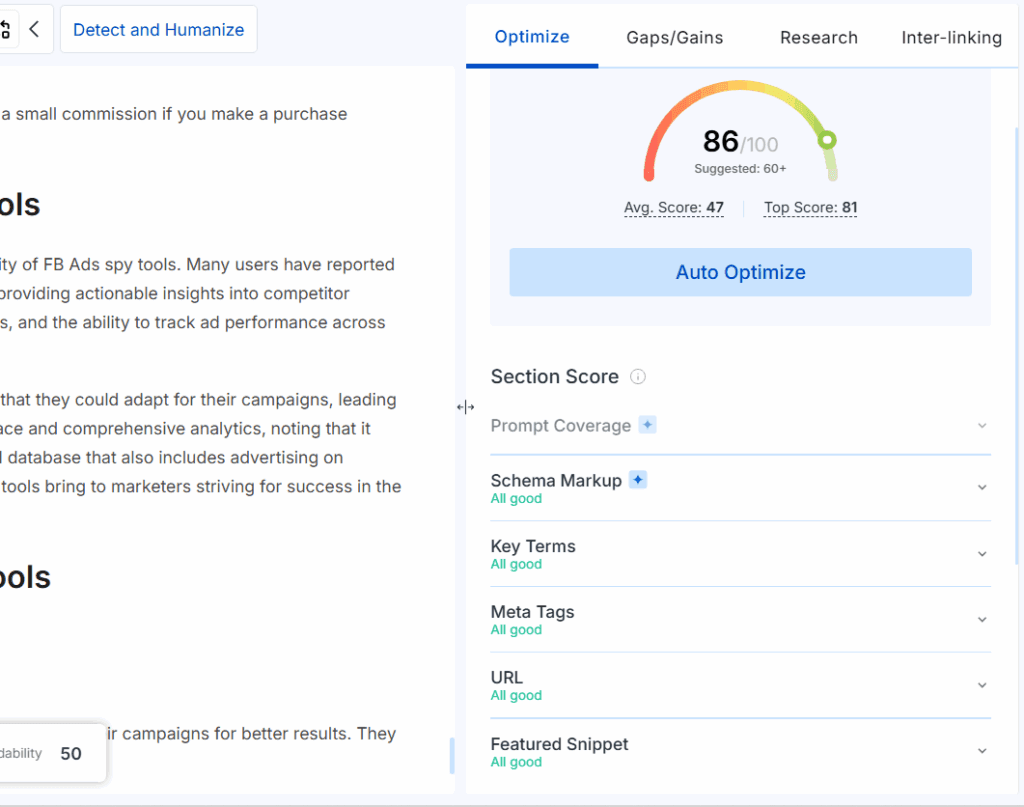
Within five minutes, the content optimizer shows
- The current content score
- Auto optimize option to add suggested opportunities
- Shows improvements to add it manually
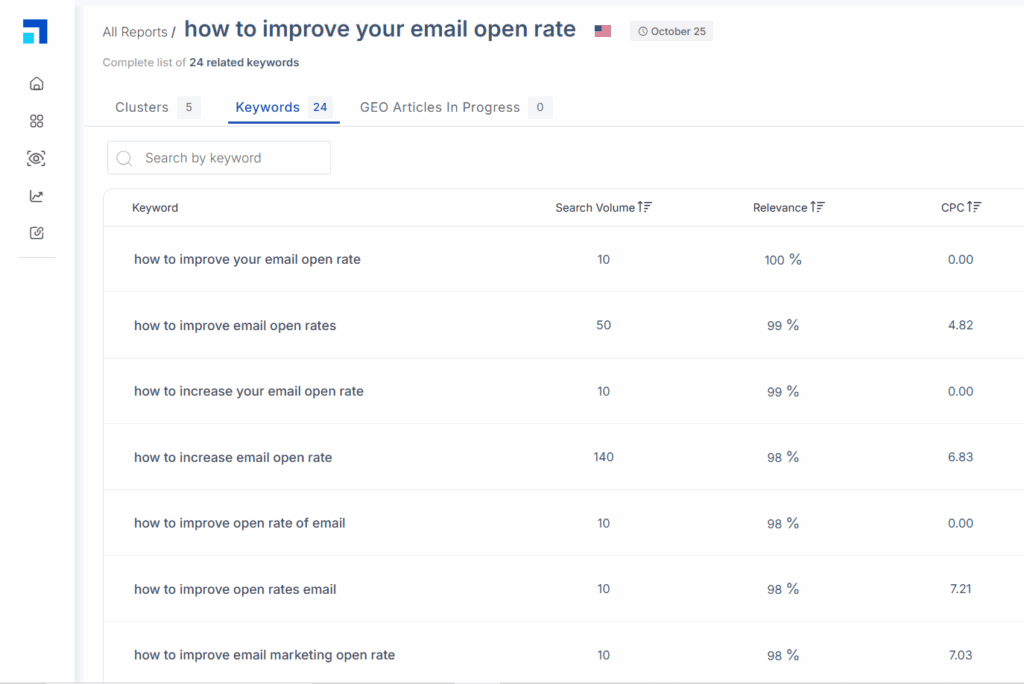
We use the Keyword Planner for research. It surfaces relevant search terms as keywords and clusters with volume and intent data. This helps you target high-opportunity topics.
Keyword Planner got two options to find related keywords:
- Using primary keyword, by entering one keyword to find related keywords.
- Importing excel or CSV file contaning list of multiple keywords to find more keywords.
To be honest, search volume shown by Scalenut is not 100% accurate and its needs further improvement.
I use SEMrush, one of the best keyword research tools, to plan keywords for my blog posts.
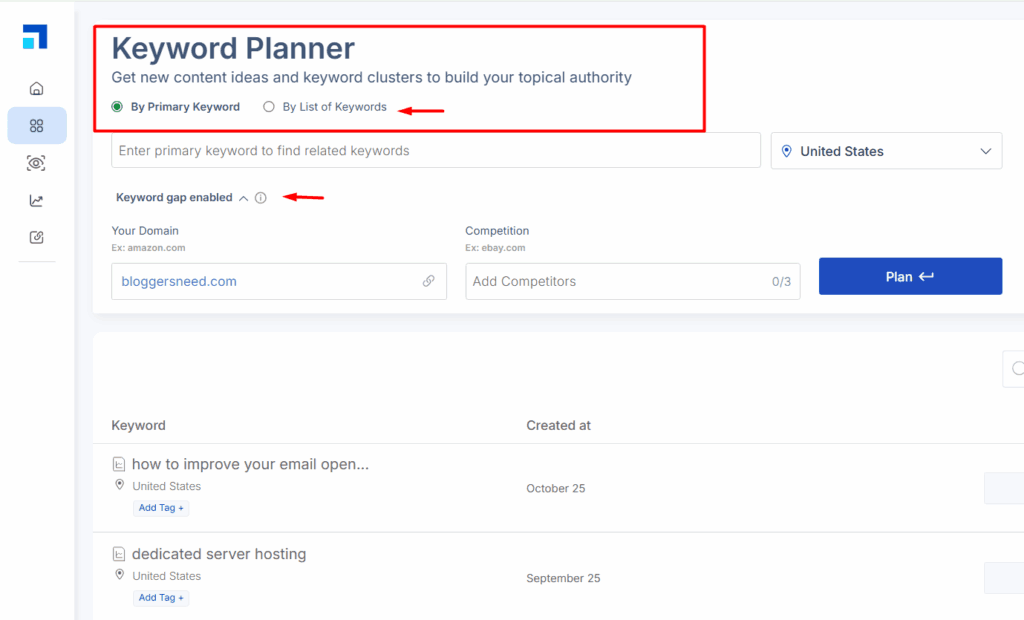
This is how scalenut keyword planner final report look like.
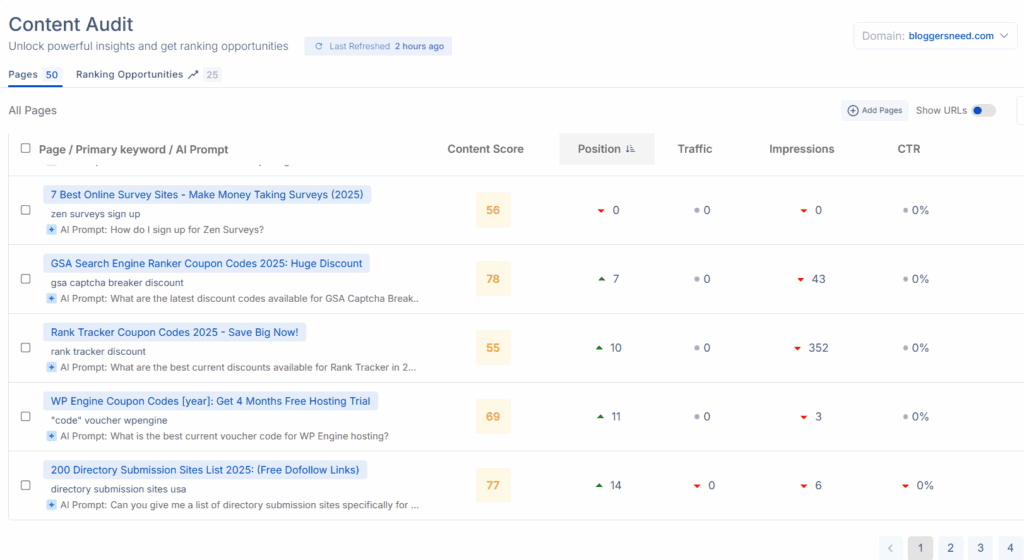
Content Audit and Traffic Analyzer track content health. They measure engagement, rankings, and user signals. You see which articles need updates or rewrites.
To audit content and analyze traffic, connect the Google Search Console with Scalenut.
For example, our website audit report includes content score, ranking position, traffic, impressions, and CTR.
The Ranking Opportunities feature identifies articles that can enhance their search rankings through a content optimization strategy.
The scalenut’s traffic analyzer shows:
- Insights: Shows pages that are gaining impressions, traffic, keywords and pages that are losing impression.
- Inventory: Shows pages with URL, keyword count, traffic, traffic share, impression, current ranking position, and ranking change.
- Cannibalization: Show pages that are competing for the same keyword
I monitor our website’s performance weekly using this traffic analyzer tool.
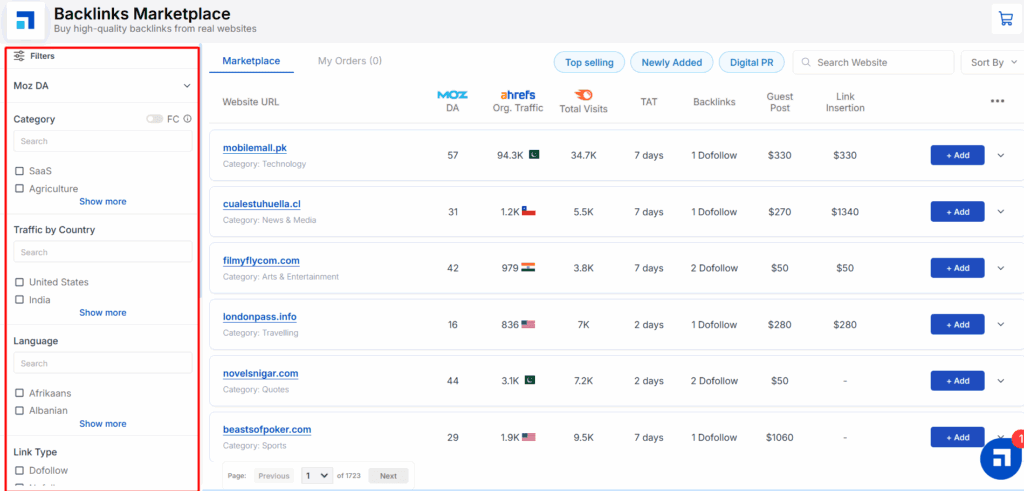
Scalenut Backlink Marketplace to buy backlinks for websites to improve rankings.
Really I was impressed with this idea.
That’s why i’ve included in this Scalenut review.
Most AI writer I’ve seen they fully focus on content creating part and don’t focus on link building.
Scalenut’s Backlinks Marketplace connects you to link opportunities. You can source relevant backlinks to boost authority. However, I noticed niche-specific options can be limited.
You can buy links by choosing:
- Country type
- Category
- Traffic
- Language
- Link type (dofollow or nofollow)
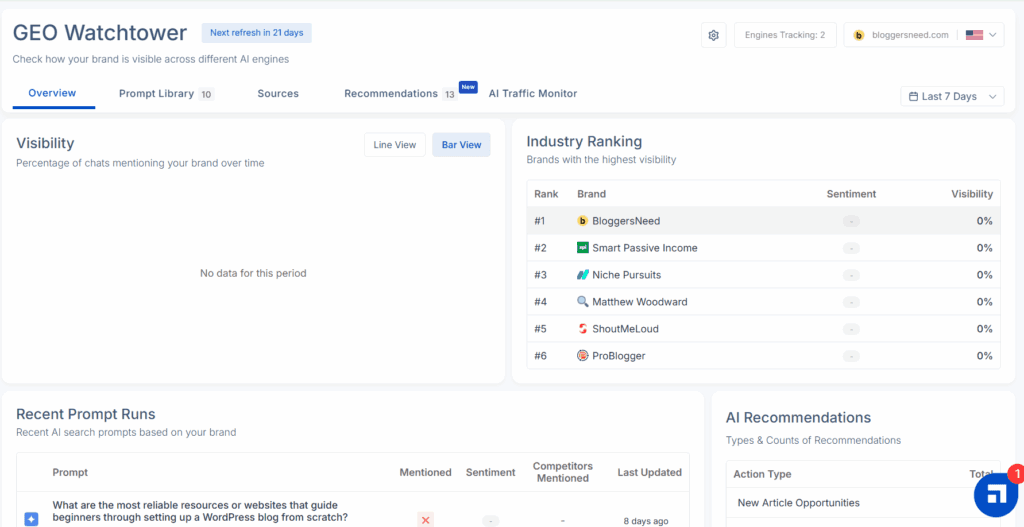
GEO Watchtower monitors SERP changes by region. You track how your brand is visible across different AI search engines across locations.
This helps monitor chats that mention your brand on LLMs like ChatGPT, Gemini, and Perplexity.
As of 2026, the brands that dominate visibility on large language models (LLMs) are gaining traffic to their websites.
People today prefer asking chatbots questions rather than typing queries into search engines.
That’s why monitoring your brand on LLM-driven results.
We use GEO Watchtower to monitor our brands on LLMs.
This Scalenut review would be incomplete without mentioning the humanizer.
AI humanizers are treding day by day.
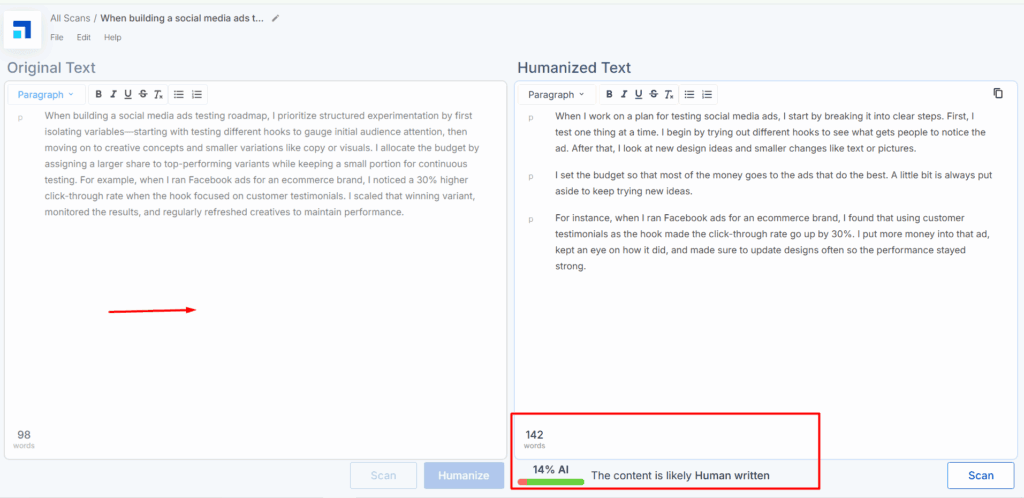
Scalenut’s Detect & Humanize improves AI-generated text. It rewrites content to sound more natural and less robotic.
You avoid penalties from search engines for AI-detection.
Till now, We’ve humanized hundreds of content using the Scalenut’s humanizer.
The results look good, which is why it’s listed at the top of the best AI humanizer tool list.
Want to see the result by yourself? Check the below image.
Social Upreach monitors website or brand mention on Reddit threads
Scalenut covers most SEO workflow needs in one place. But for advanced link-building or deep analytics, you may need dedicated platforms (like Ahrefs, SEMrush). You benefit most if you want an all-in-one, mid-level SEO suite.
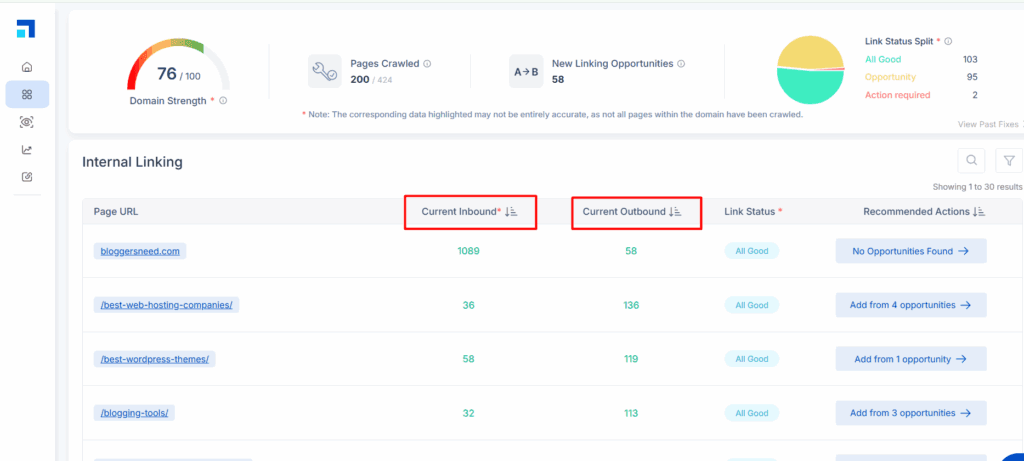
Link Manager crawls websites to display inbound and outbound links for each article.
We can easily identify orphan pages without links, and it automatically suggests internal linking opportunities.
User Experience and Interface
Scalenut’s dashboard stands out for its clarity. You get a clean layout with minimal distractions. Every key area is visible at a glance.
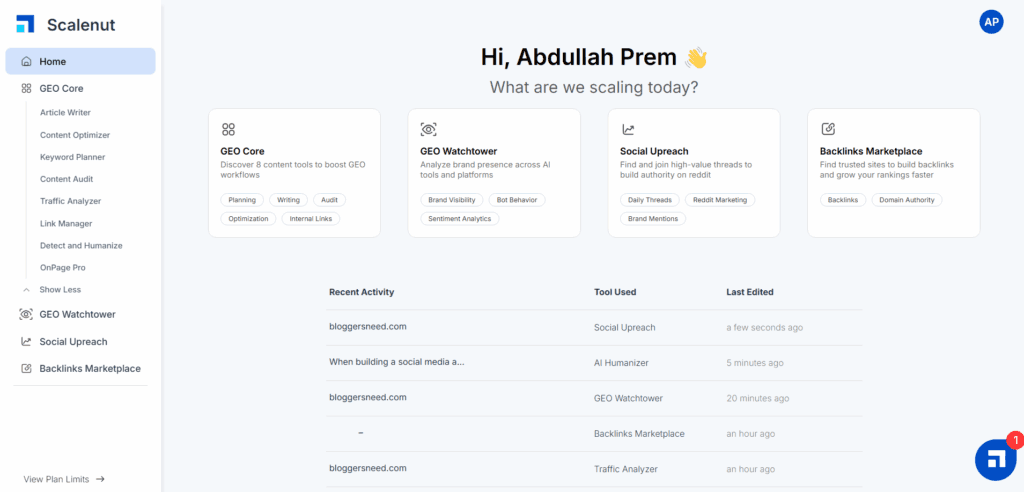
Navigation speed is a highlight. Moving between core tools (Article Writer, Content Optimizer) is seamless. I rarely see lag or confusion during workflow shifts.
The Article Writer offers an intuitive writing space. Formatting tools are where you expect them to be. You don’t need a learning curve to get started.
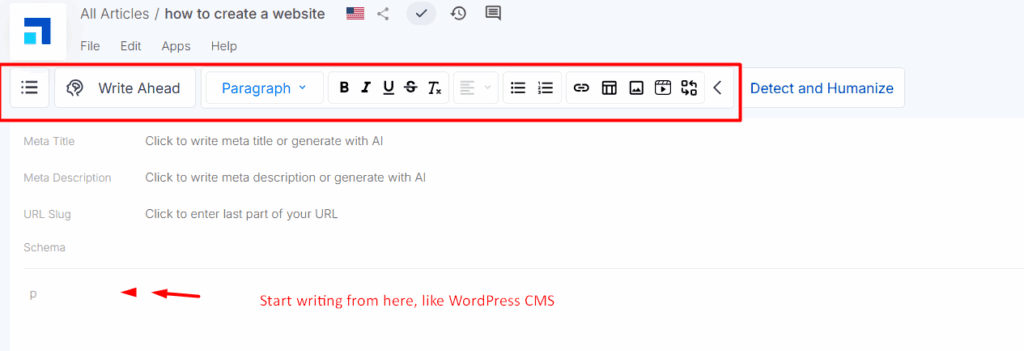
Content Optimizer visualizes SEO insights clearly. We noticed competitive data and keyword usage are easy to interpret. You can find improvement opportunities quickly.
Keyword Planner and audit reports load fast. You see keyword clusters and topical gaps without digging. This helps you prioritize next steps.
Watchtower and Social Upreach are stripped-down, focused interfaces. I appreciate the lack of clutter. You’ll navigate outreach and monitoring tasks in a few clicks.
Backlinks Marketplace uses robust filtering. You sort by domain, authority, or relevance with ease. Some advanced sorting options could help, but basics work well.
If you prefer deep customization or advanced analytics, Scalenut’s UI might feel basic. Competitors (like Surfer or SEMrush) offer more granular control.
For most content marketers and SEO professionals, Scalenut’s interface speeds up routine tasks. You spend less time searching—more time creating.
SEO Tools and Performance
Scalenut’s SEO toolkit covers the basics well. You get modules for keyword research, content optimization, auditing, and SERP tracking. Each tool works fast, with an interface that’s easy to navigate.
The Keyword Planner delivers solid search volume and competition data. I noticed the topic suggestions are relevant, but less granular than what you’d see in Ahrefs or SEMrush. If you need highly specific clusters, you might feel limited.
Content Optimizer analyzes topical coverage and keyword density in your draft. We found it helpful for nailing search intent alignment. That said, the depth of NLP suggestions or competitor analysis isn’t as advanced as Surfer SEO or Clearscope.
Content Audit runs quick checks for on-page SEO gaps (like missing H2s, alt text, or internal links). You get actionable fixes, but the reporting is more high-level than granular. For basic site hygiene, it’s enough. For technical SEO, you’ll need more.
Watchtower pulls SERP data and highlights AI ranking shifts over time. You get clear graphs and easy-to-read summaries. If you want daily movement tracking, it works. But for deeper SERP analysis tools like Semrush AI Took kit or SERanking go further.
Scalenut’s keyword clustering groups terms by semantic similarity. It’s automatic, but the clusters are broad—helpful for topical maps, less so for siloed site structures. If your workflow depends on advanced clustering, you may outgrow this feature.
SERP alignment scoring is straightforward. You get a relevance score for your content versus current top-ranking pages. We saw consistent outputs, but the scoring is less nuanced than Clearscope’s or MarketMuse’s competitive grading.
Bottom line: Scalenut’s SEO tools are reliable for core tasks. You move fast and get clarity, especially if you’re after foundational SEO wins. If you need deep data, technical SEO, or edge-case workflows, you might want to supplement with other platforms (like Page Optimizer Pro, Semrush Content Kit, or Jasper AI).
My Experience with Scalenut
I will share my personal experience with Scalenut in this section.
Scalenut’s workflow is fast. The AI research tool pulls data and builds outlines quickly. I found it easy to go from idea to draft in minutes.
The platform’s content structuring stands out. You get clear headings, logical subtopics, and helpful suggestions. This saves time, especially on complex topics.
Social Upreach tracks trends and competitors. However, I noticed delays with fresh topics. If you need real-time updates, this tool may feel slow.
Watchtower analyzes and show AI visibility for competitive research. The insights are valuable for SEO planning. At times, the UI feels crowded, which can slow you down.
For workflow, Scalenut keeps most steps streamlined. Switching between research and writing is smooth. This helps you stay focused without extra clicks.
If you need deep analytics or trend tracking, you may want a specialized tool (like BuzzSumo, Ahrefs). But for fast, guided content creation, Scalenut fits well.
We found onboarding clear and support responsive. You get documentation and chat help. If you’re new to AI writing, there’s guidance at each step.
Scalenut may not suit power users who need custom integrations. It’s ideal if you want a ready-to-use, guided workflow. If you value speed and structure, you’ll benefit most.
Users searching for a Scalenut review often want to know the pros and cons — which is what we examine next.
What Are the Pros of Scalenut?
The pros of Scalenut
- Content Really Ranks: We ranked keywords from zero search to low competition using Scalenut articles.
- One Click Auto Optimize: Scalenut’s auto content optimizer efficiently enhances your article by analyzing top-ranking competitors, identifying missing elements, and ensuring your content aligns with user intent.
- In-built Humanizer: With one click, it humanizes AI-generated content, making it undetectable by AI article detection tools.
- User Interface (UI): Scalenut offers a clean, intuitive dashboard. You move smoothly from research to writing to optimization—no extra tabs or confusion. For teams, this unified workflow cuts friction and improves focus. If you value speed and simplicity, Scalenut’s UI stands out.
What Are the Cons of Scalenut?
Despite Scalenut’s impressive toolkit, several limitations deserve your attention.
- Speed: Scalenut’s platform sometimes runs slow—especially when using advanced tools like Cruise Mode or SEO Editor. I’ve noticed this lag can interrupt content planning workflows. You may find it frustrating if you’re used to real-time feedback.
- Data Accuracy: Keyword data in Scalenut (such as search volume and competition metrics) occasionally needs double-checking. We’ve compared results to Ahrefs and SEMrush, and inconsistencies appear. If accurate keyword research is critical, you’ll need to verify results.
- Humanization Feature: Scalenut’s humanization tool (for AI-generated text) isn’t perfect. I see outputs that still read robotic or formulaic. You’ll probably have to edit most content to match your brand voice.
- Watchtower Module: The Watchtower module (for AI Visibility monitoring) is still evolving. It lacks depth you’ll find in competitors like Surfer SEO. You may need supplemental tools for comprehensive LLMs brand mentions tracking.
Despite these limitations, the overall value of Scalenut depends on how well its pricing and feature depth align with your content requirements — which we examine next.
Scalenut Plans Pricing
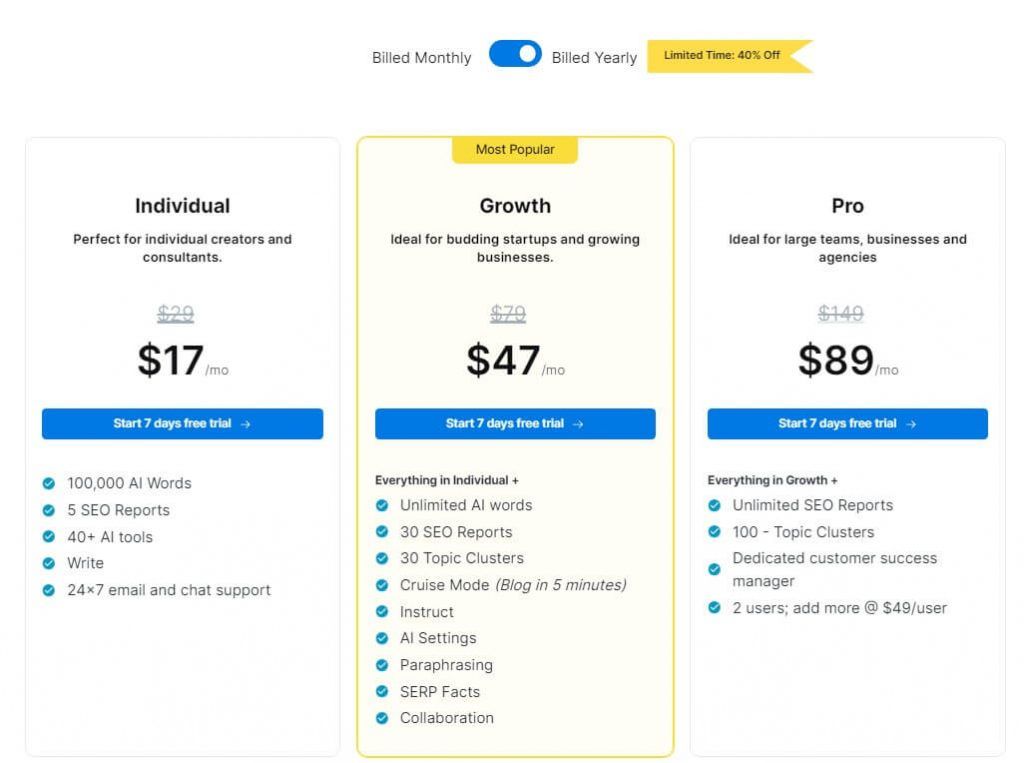
Scalenut uses a tiered pricing model. Each plan targets a different user type. Annual billing unlocks bigger savings.
Scalenut’s pricing structure reflects its target user base.
It got three plans:
- Individual: Suits for solo creators or small agencies. You get core content optimization tools without heavy overhead.
- Growth: Ideal for growing companies to generate unlimited content daily.
- Pro: Best for agencies and business, with unlimited content and reports.
Which plan should i choose?
After reading this Scalenut review, people often contact us to ask which plan they should choose.
If you’re a beginner with a single blog seeking a content writing tool, choose the individual plan.
If you publish content on multiple blogs like we do, choose the Growth plan. We use the Growth plan.
Scalenut offers a 7-day free trial. You can try any plan risk-free. If the features don’t fit, you can move on to another AI writer.
If you’re looking for current promotions, you can check our dedicated guide on the Scalenut coupon code for any active deals or seasonal discounts.
Bottom line:
Scalenut isn’t ideal for those seeking only basic AI writing. Its value emerges when you tap into layered SEO and content marketing functions. If you just want a simple writer, consider using ZimmWriter.
Scalenut vs Surfer SEO
When comparing Scalenut and Surfer SEO, you’ll find two powerful content optimization tools with distinct approaches to helping creators rank better.
Scalenut’s content scoring focuses on NLP analysis, while Surfer provides more granular optimization depth.
Surfer’s Watchtower advantage offers real-time SERP monitoring, though Scalenut counters with more affordable pricing and superior AI writing capabilities for complete content workflows.
Scalenut vs Surfer SEO
Both Scalenut and Surfer SEO target content optimization.
Scalenut leans on NLP-based scoring.
Surfer SEO focuses on granular SERP feature analysis.
I notice both help you rank, but in different ways.
Scalenut’s content scoring uses NLP analysis.
This means it reads top-ranking pages for patterns.
You get actionable topic clusters and keyword suggestions.
I find this helpful for quick content briefs.
Surfer SEO drills deeper into optimization details.
You see exact keyword density, page structure, and backlink data.
For technical users, this level of insight is valuable.
We see Surfer used by SEO specialists and agencies (e.g., agencies, consultants).
Surfer’s Watchtower feature offers real-time SERP monitoring.
You get alerts when rankings or competitors change.
This keeps you updated without manual checks.
If you value live SERP data, you’ll appreciate this.
Scalenut stands out for pricing and workflow.
Plans are often more affordable than Surfer’s.
Scalenut’s AI writer covers the full content workflow—research, outline, draft, optimize.
You get a streamlined, end-to-end experience.
Scalenut’s AI writing is robust.
You can generate long-form content in one workflow.
We see faster drafts for blog posts, guides, and landing pages.
If you want speed and automation, Scalenut delivers.
Surfer SEO’s optimization depth is its edge.
You see detailed competitor analysis and topic gaps.
This is ideal if you want to fine-tune every ranking factor.
Surfer may overwhelm beginners, but experts love its control.
Limitations exist for both.
Scalenut’s NLP sometimes misses deep technical nuances.
Surfer’s pricing can be steep for solo creators or small teams.
You should weigh workflow needs against budget and expertise.
Bottom Line:
If you need affordable, AI-powered writing with decent optimization, Scalenut fits.
If you want granular SERP analysis and real-time monitoring, Surfer SEO wins.
Scalenut Alternatives
While Scalenut offers impressive AI content creation and SEO features, you’ll find several compelling Scalenut alternatives in the market that might better suit your specific needs.
1. Surfer SEO
Surfer SEO focuses on granular content optimization.
You get real-time keyword suggestions and SERP analysis.
I found its audit tool fast and actionable.
Surfer’s interface is simple, but power users get more value from its integrations (like Jasper, WordPress).
If you want quick, data-driven on-page recommendations, Surfer SEO stands out.
However, it’s less suited for large-scale content teams needing robust AI writing.
2. Frase
Frase combines research, content briefs, and AI writing in a single workflow.
You can generate outlines, summaries, and SEO improvements without switching tabs.
My experience: Frase speeds up topic research and content ideation.
It offers direct Google data extraction, but sometimes the UI feels cluttered.
If you want research and writing in one tool, Frase is a solid pick.
It’s less ideal if you only need pure optimization or a standalone AI writer.
3. NeuronWriter
NeuronWriter uses semantic analysis for topic coverage and content depth.
You see NLP-driven keyword suggestions and competitor content gaps.
We noticed its recommendations are more granular than most AI writing tools (like Writesonic, Copy.ai).
NeuronWriter is best for content teams focused on topical authority and semantic SEO.
If you need simple, general content generation, it might feel complex.
NeuronWriter works well for advanced SEO pros but is less intuitive for beginners.
User feedback plays a key role in any Scalenut review, so the next section looks at public opinions.
What Others Say About Scalenut?
How does Scalenut fare in the court of public opinion?
Scalenut stands out for its content marketing platform. I notice users often highlight the intuitive interface. You can find the dashboard easy to navigate.
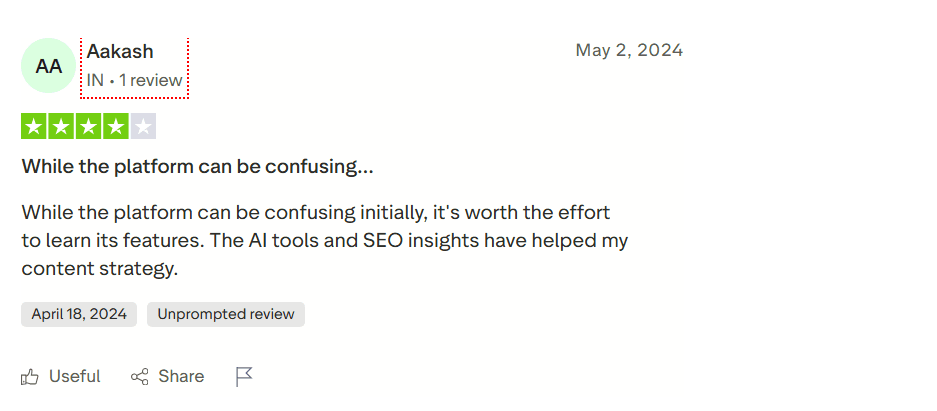
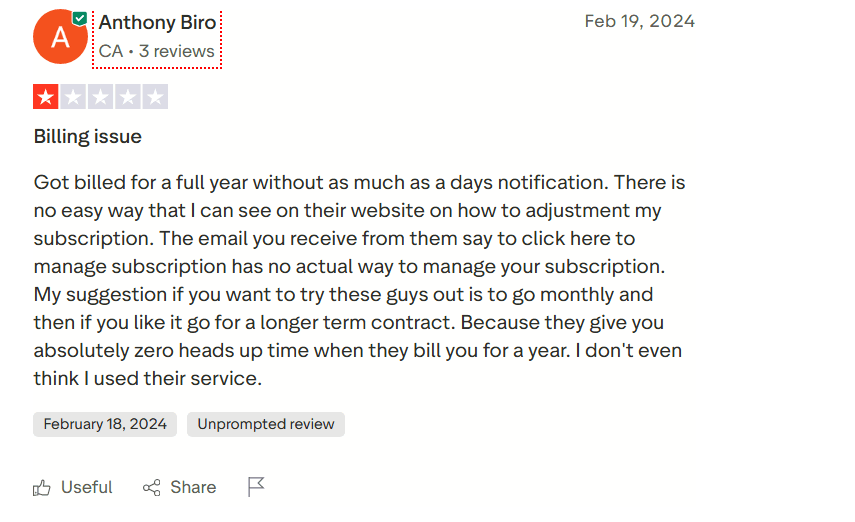
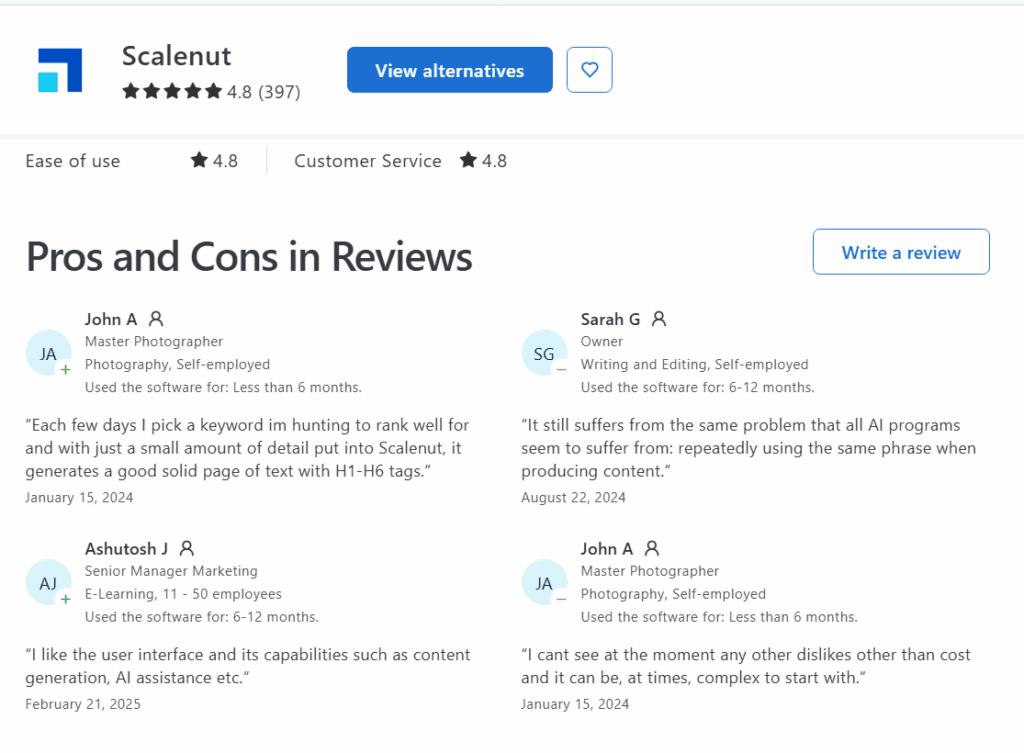
I reviewed user feedback for Scalenut on major platforms such as Trustpilot and Capterra.
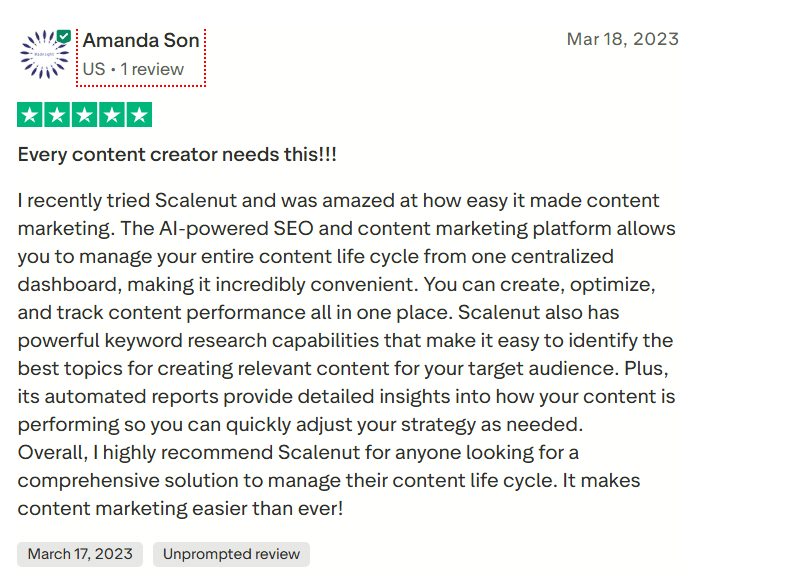
Some users praised the content output.
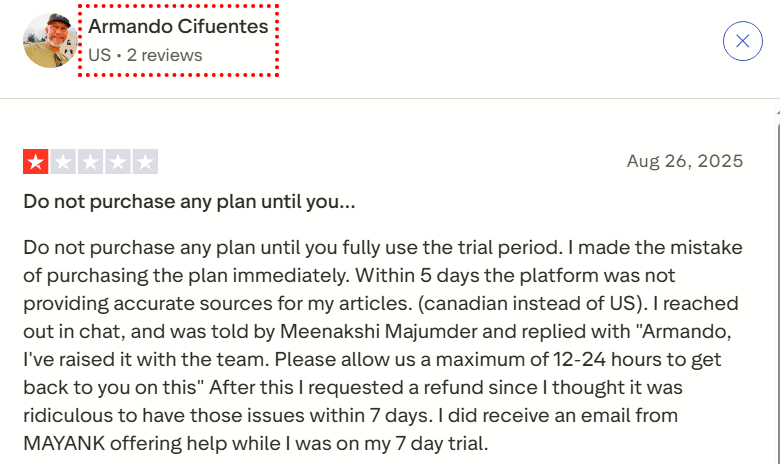
While users some got dissappointed with the support.
Some encountered billing issues.
Others noted that the output contained repetitive words. I recommend always reviewing generated drafts.
I noticed mixed reactions regarding the Scalenut tool.
Below are some real and honest Scalenut reviews from users.
Scalenut is best for marketers and content teams who need workflow automation. If you want highly nuanced, expert-level copy, alternatives might serve you better.
Casual bloggers or one-off users may find the platform more robust than needed.
Scalenut Review – Is This Tool Worth to Try?
Now it’s the end part of my review.
Scalenut is a cool tool to produce auto optimized content.
I found its content research tools fast and reliable. You get SEO-focused outputs at a lower cost than most alternatives (Frase, Jasper, Surfer).
But sometime the contents are seem robotic and not suitable for posting without editing it.
Yes I know, no tool is perfect.
But it is one of the best AI writer for blog posts.
Bloggers like me and affiliate marketers use this tool to scale content for their blogs and landing pages.
If you want affordable, efficient SEO content, you’ll find Scalenut reliable.
Skip it if you demand highly nuanced, human-like writing or advanced editing controls.
Frequently Asked Questions
Which AI writing tool is best?
There isn’t a single “best” AI writing tool because each platform excels in different areas. Scalenut is strong for SEO-focused content and SERP-driven outlines. Jasper is better for marketing copy and templates. Copy.ai is useful for quick idea generation, while Writer.com suits enterprise teams needing brand consistency. The right choice depends on your workflow and content goals.
How much does Scalenut cost?
Scalenut uses tiered pricing based on plan type, word limits, and feature access. Most plans fall between $20, $79 and $149+ per month, with higher-tier options offering more SEO tools, collaboration features, and long-form writing capabilities. Exact pricing varies, so checking the official pricing page is best for current rates.
Is Scalenut free?
Scalenut isn’t fully free, but it typically offers a 7 day free trial so users can test the platform. Full features — including SEO tools, long-form writing, and higher usage limits — require upgrading to a paid plan.
Is Scalenut good for SEO content?
Yes. Scalenut is specifically designed for SEO workflows. Its SERP Analyzer, NLP term suggestions, and topic clustering features help create content that aligns with search intent and improves topical relevance. It’s one of the stronger options for long-form SEO articles.
Does Scalenut offer long-form article generation?
Yes. Scalenut includes a long-form editor that can generate full articles, expand sections, rewrite content, and follow SEO brief guidelines. It works best when paired with custom prompts and structured outlines.
Can Scalenut create content in multiple languages?
Scalenut supports multiple languages, but the strongest and most accurate output is typically in English. Other languages may work well for general writing but may not have equally strong SEO optimization features.
Affiliate Disclosure: Some of the links in this post are affiliate links, which means I may earn a small commission if you make a purchase through those links. This comes at no extra cost to you. Thank you for your support!
Scalenut Review 2026 $20
-
Output Quality
-
User Experience
-
Features
-
Pricing
-
Support
Summary
An honest Scalenut review covering its SEO tools, long-form writing performance, pros, cons, pricing, and overall value for bloggers and marketers.