
How to Find Winning Products to Sell on Amazon FBA October 2026
Discover profitable Amazon FBA product ideas with high demand and low competition in October 2026. Utilize data-driven research criteria, reverse ASIN validation, and profit margin formulas to build a multi-figure Amazon business.
The official Amazon FBA product validation graphic above illustrates core research parameters used by successful private label sellers in October 2026.
Launching a profitable Amazon FBA private label brand requires moving past personal guesses and evaluating empirical market demand data. Finding winning products requires analyzing search volume trends, average review velocity, Best Sellers Rank (BSR) history, and landed unit costs.
With millions of active listings on Amazon, identifying underserved sub-niches allows new sellers to launch products that capture market share without getting crushed by established brands.
Integrating product selection workflows with accurate keyword research safeguards profit margins. Reviewing software tools alongside active promo codes in our guide to Helium 10 coupon codes ensures affordable software access. Below is a comprehensive walkthrough for finding winning Amazon products in October 2026.
Core Validation Criteria for Amazon FBA Winning Products
Evaluating prospective Amazon products against established benchmark metrics prevents launching low-margin or overly competitive inventory. Review the core product selection metrics below.
| Product Selection Metric | Target Benchmark Standard | Strategic Purpose & Business Impact |
|---|---|---|
| Retail Price Point | $25.00 to $70.00 retail price | Protects net profit margins after Amazon FBA storage and referral fees. |
| Monthly Sales Volume | 300+ units sold per month (Top 10 sellers) | Ensures sufficient baseline customer demand across main keywords. |
| Review Count Threshold | Top 5 competitors have under 250 reviews | Allows new listings to rank quickly using PPC ad campaigns. |
| Unit Weight & Dimensions | Under 3 lbs (Standard Tier FBA Size) | Minimizes air freight shipping costs and Amazon FBA fulfillment fees. |
| Net Profit Margin % | 30%+ Net Margin after FBA & Ad Spend | Provides cash flow cushion for inventory restocking and PPC spend. |
Analyze Products with Helium 10 Black Box
Using Software Databases to Identify Underserved Amazon Niches
Database search tools like Helium 10 Black Box allow sellers to filter millions of Amazon ASINs by revenue, price point, and review counts. This replaces manual browsing with data-backed discovery.
By specifying custom filter combinations, sellers quickly isolate high-demand items that established competitors have overlooked.
Filtering ASIN databases by review count helps find niches where top sellers carry under 100 reviews. This indicates low barriers to entry for new brands.
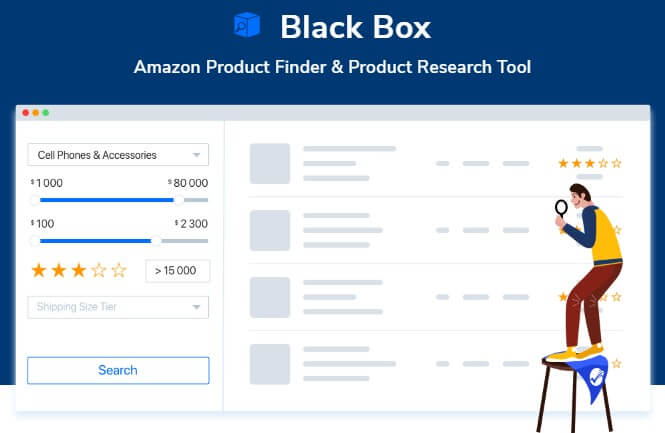
The Helium 10 Black Box product research database screenshot above highlights filter inputs used to surface low-competition product niches.
Discovering profitable product opportunities works best when paired with comprehensive merchant setups. Review step-by-step guidance in our guide on how to sell on Amazon store step by step.
Access Black Box research features directly through the official Helium 10 product research tool link.
Calculating Amazon FBA Unit Economics & Net Profit Margins
Calculating exact unit economics before sourcing inventory prevents selecting items that lose money after Amazon storage and shipping fees. Sellers must verify net profit margin percentages prior to placing factory purchase orders.
A reliable mathematical formula for evaluating Amazon product net margin is:
Net Profit Margin % = [(Retail Price – Landed Factory Cost – Amazon FBA Fee – Amazon Referral Fee – Target PPC ACoS) / Retail Price] × 100
For example, consider an item selling for $40.00 on Amazon with a landed factory cost of $8.00 per unit.
Factoring in $7.00 for Amazon FBA referral fees and $5.00 for target PPC advertising leaves a net profit of $20.00 per unit, delivering a 50% net margin.
Evaluating category profit potential helps isolate high-margin opportunities across niches like apparel, electronics, and home goods.
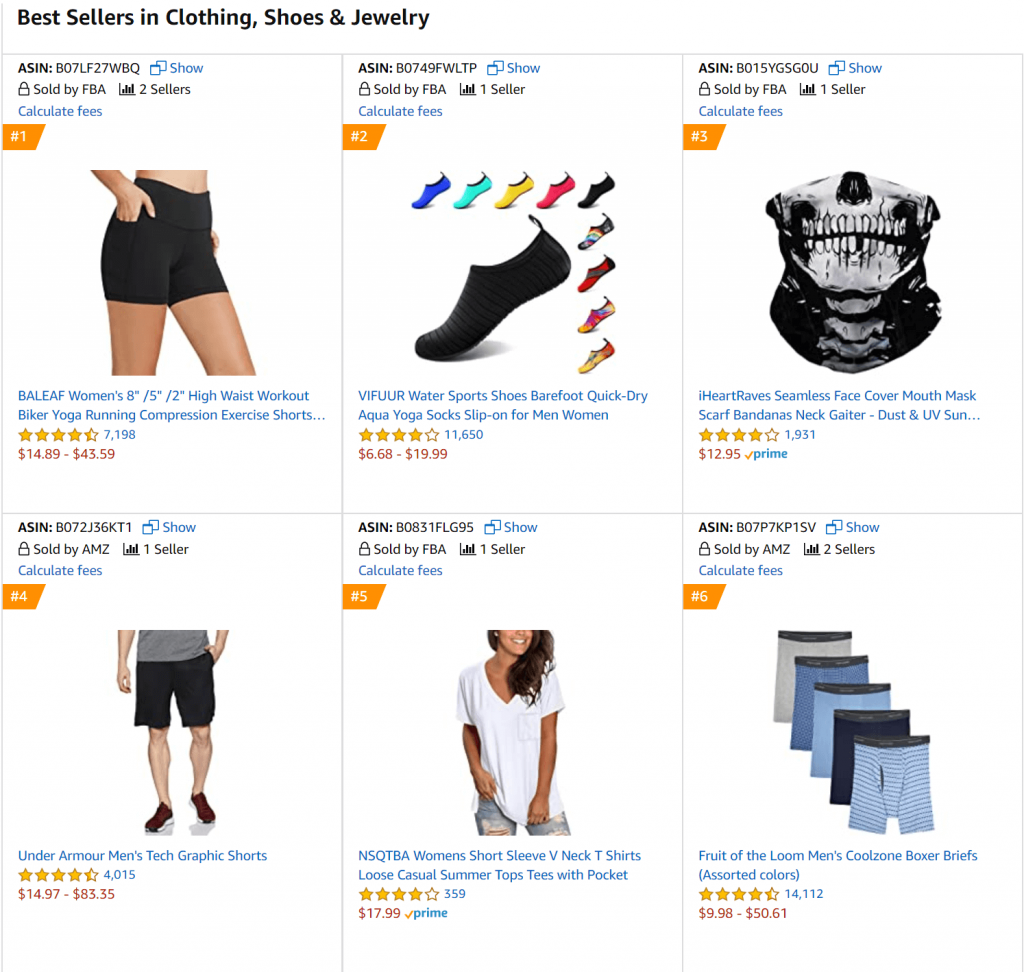
The Amazon product category breakdown graphic above illustrates high-demand clothing and consumer goods categories analyzed for FBA profitability.
Differentiating Products to Outperform Established Competitors
Turning a standard commodity product into a winning private label brand requires creative product differentiation and bundle design. Simply copying existing top sellers leads to price wars.
Successful product differentiation techniques include:
1. Fixing Negative Review Complaints
Analyze 1-star and 2-star reviews on top competitor listings to identify recurring design flaws, material weakness, or packaging issues. Instruct your factory supplier to fix those exact defects before launching your inventory batch.
Resolving customer complaints creates immediate competitive advantage on search results pages.
2. Bundling Complementary Accessories
Pair your main product with a low-cost accessory to increase perceived customer value without raising production costs significantly. For example, bundle a custom cleaning cloth or storage pouch with your main item.
Bundles prevent direct price matching by competing storefronts.
3. Improving Packaging & Visual Branding
Design custom unboxing packaging and clear user instruction inserts to enhance your brand above generic white-label competitors. High-end presentation increases customer review ratings.
Professional custom packaging builds brand loyalty and encourages repeat orders.
4. Optimizing Organic Search Indexing
Structure listing titles, bullet points, and backend search terms using verified high-volume buyer keywords. Review optimization methods in our guide to ranking organically on Amazon through SEO.
Step-by-Step UI Guide: Sourcing & Validating Winning Products
Moving from initial product discovery to factory production requires following a systematic 5-step sourcing workflow. Follow these operational steps to launch successfully.
Step 1: Conduct Search Volume & Keyword Audit
Verify that primary buyer keywords generate at least 5,000 combined monthly searches using Cerebro or Magnet keyword tools.
Step 2: Check Patent & Trademark Clearance
Inspect the US Patent and Trademark Office (USPTO) database to confirm that the product design or utility mechanisms are not protected by active patents.
Step 3: Request Supplier Quotes on Alibaba
Submit Requests for Quotation (RFQs) to multiple vetted suppliers on Alibaba. Request quotes for 500-unit and 1,000-unit production runs including custom logo printing.
Step 4: Order & Evaluate Factory Samples
Order physical sample units from top 3 suppliers. Conduct stress tests and quality checks to verify material durability and packaging finish.
Step 5: Calculate Final Landed Shipping Costs
Obtain freight forwarding quotes for DDP (Delivered Duty Paid) air or sea freight to confirm total landed unit cost prior to issuing initial deposit payments.
Review comprehensive operational reviews in our detailed Amazon FBA platform review and inspect external business analysis frameworks via Blue Meta brand analysis guide.
Vetting Overseas Factory Suppliers and Production Quality
Selecting reliable overseas manufacturers requires auditing supplier trade assurance history, factory certifications, and response times. Never wire funds without verifying supplier background credentials.
Prioritize suppliers that carry Gold Supplier status on Alibaba and offer Trade Assurance payment protection. This guarantees refunds if production orders fail quality inspections.
Hiring a third-party inspection agency (e.g. QIMA or V-Trust) to inspect finished inventory batches at the factory before shipment prevents shipping defective inventory to Amazon warehouses.
Inspecting factory production lines ensures material standards match approved pre-production samples exactly.
PPC Advertising Strategy for Launching New Amazon Listings
Launching a new Amazon listing requires running targeted Sponsored Products campaigns to drive initial sales velocity and acquire buyer reviews. PPC campaigns accelerate organic keyword indexing.
Set up automatic campaigns alongside manual exact-match campaigns targeting your top 5 high-intent buyer keywords. Maintain aggressive bidding during the first two weeks to capture top placement positions.
Monitor campaign Advertising Cost of Sales (ACoS) daily. Negative keywords should be added continuously to filter out unprofitable search queries.
Initial PPC ad spend accelerates sales history signals required for organic keyword ranking algorithms.
Managing FBA Inventory Restocking and Storage Fees
Maintaining consistent FBA inventory levels prevents listing suppression caused by stockouts while avoiding long-term storage fee penalties. Amazon rewards listings that maintain steady inventory velocity.
Calculate lead times from factory order placement to FBA warehouse check-in. Factoring in 30 days for sea freight and 15 days for factory production prevents inventory gaps.
Calculated inventory forecasting reduces long-term storage fees charged during Q4 peak holiday selling seasons.
Pairing 3PL backup storage with automated inventory alerts ensures consistent buy box eligibility throughout sales spikes.
Find Winning Amazon Products Now
FAQs About Finding Products to Sell on Amazon FBA
Review answers to frequently asked questions regarding Amazon product research, sourcing budgets, and software selection below.
How much money do I need to start Amazon FBA product sourcing?
Most successful Amazon FBA sellers start with $2,500 to $5,000 in initial capital. This budget covers initial inventory production (500 units), sea freight shipping, product packaging design, UPC barcodes, and initial Amazon PPC launch ad spend.
What is the Best Sellers Rank (BSR) to look for in product research?
Target products with a Best Sellers Rank (BSR) between 1,000 and 20,000 in main sub-categories. A BSR within this range indicates consistent daily sales velocity without overwhelming top-tier competitor volume.
Can I find winning products without using paid software tools?
While manual browsing on Amazon Best Sellers lists is possible, using dedicated software databases like Helium 10 provides accurate sales volume estimates and revenue numbers that prevent costly inventory mistakes.
What product categories should beginners avoid on Amazon FBA?
Beginners should avoid complex electronics, hazardous materials, meltable grocery goods, and heavily branded categories like major apparel or footwear. These categories carry high return rates, gating restrictions, or strict liability risks.

I’m Abdullah Prem, a passionate blogger with over 10 years of experience. I created BloggersNeed to produce high-quality, easy-to-understand articles, guides, and tutorials that help people start their blogging journey. Specializing in WordPress, Hosting, Themes, and online money-making strategies, I’ve been featured on leading tech platforms such as Tech.co, Cloudways, Business2Community, Leadpages, GoodFirms, and ShareThis. BloggersNeed.com