
Amazon Advertising Strategy & PPC Tips for Sellers 2026
Mastering Amazon Advertising PPC campaigns requires structuring Sponsored Products, Sponsored Brands, and Display Ads to lower Advertising Cost of Sales (ACoS) in 2026. Discover proven bidding strategies, negative keyword filtering, and organic ranking optimization techniques below.

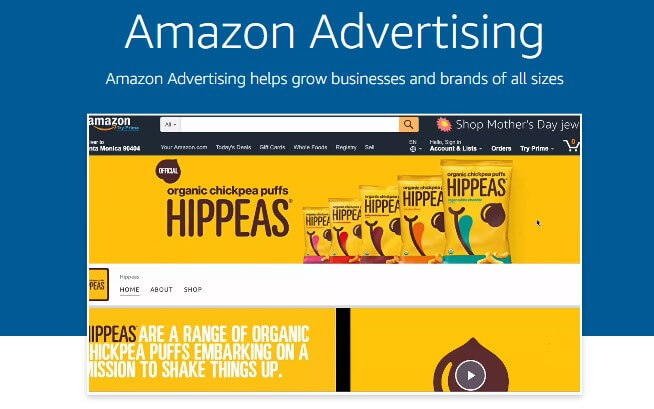
The Amazon PPC advertising overview banner above illustrates core campaign types used by Amazon FBA merchants to capture top SERP positions in 2026.
To automate bid rules and dayparting across large catalogs, review platforms analyzed in our BloggersNeed Amazon PPC management tools guide to optimize campaign profitability.
Amazon Advertising has grown into the third-largest digital advertising network globally behind Google and Meta. Millions of Amazon third-party merchants rely on paid Sponsored Products and Sponsored Brands campaigns to gain instant buy box visibility.
Creating a profitable PPC strategy requires balancing customer acquisition costs against target profit margins. Successful Amazon sellers structure campaigns by keyword match types, harvest search term reports, and optimize advertising target bids continuously.
Evaluating keyword bidding strategies alongside organic listing optimizations accelerates product ranking velocity. Following our comprehensive walkthrough on how to find products to sell on Amazon FBA provides the foundation for building high-margin brand portfolios.
Understanding Amazon Advertising PPC Ad Formats
Amazon provides three primary pay-per-click ad formats designed to target shoppers at distinct stages of the buying journey. Review the core ad types available inside Amazon Campaign Manager.
The Amazon Display Ads showcase visual above highlights banner placements appearing across competitor detail pages and customer search results.
1. Sponsored Products Ads
Sponsored Products ads appear directly within search results pages and product detail pages targeting specific keyword queries. Operating on a cost-per-click (CPC) model, Sponsored Products drive immediate high-intent buyers to single ASIN listings.
Setting up exact match campaigns for high-converting root keywords ensures maximum Impression share while controlling ad spend. Pair Sponsored Products with our guide on how to rank organically on Amazon through SEO to capture dual SERP placement.
2. Sponsored Brands Ads
Sponsored Brands ads feature brand logo graphics, customized headlines, and multiple product images displayed prominently at the top of search results. Brand registered sellers utilize Sponsored Brands to drive traffic directly to custom Storefront subdomains.
Featuring compelling promotional copy in headline banners increases shopper engagement and builds long-term brand recall across category shoppers.
3. Sponsored Display Ads
Sponsored Display ads utilize behavioral targeting and retargeting pixels to reach shoppers on and off Amazon. Display campaigns target visitors who viewed your product listing or competitor ASINs without purchasing during past sessions.
Retargeting interested shoppers keeps your product top-of-mind during longer customer consideration cycles, recovering lost conversion opportunities automatically.
Step-by-Step Optimization Strategy to Lower Amazon ACoS
Lowering Advertising Cost of Sales (ACoS) requires systematic bid adjustments, negative keyword isolation, and listing conversion rate optimizations. Follow the actionable 5-step workflow below.
Step 1: Harvest High-Converting Customer Search Terms
Extracting real customer search queries from automatic campaign reports reveals long-tail keywords generating profitable sales. Transfer high-converting customer search terms into manual Exact Match campaigns weekly.
Setting up exact match parameters prevents bidding budget leakage on irrelevant search variations while securing top-of-search placement for proven revenue drivers.
Step 2: Isolate Non-Performing Keywords with Negative Match
Adding unprofitable keywords to your campaign negative phrase list eliminates wasted ad spend on irrelevant search queries. Filter out terms with high click volumes yielding zero conversions after 15 clicks.
Regularly reviewing search term reports isolates search intent mismatches, protecting ad margins during competitive sales events.
Step 3: Optimize Campaign Bidding Strategies
Utilizing Dynamic Bidding options controls automatic bid increases based on conversion probability. Choose Dynamic Bids – Down Only during early launch testing to prevent overspending on unproven listings.
Adjusting placement bids for Top of Search allows securing premium top-row SERP positions where buyer click-through rates peak.
Step 4: Improve Listing Conversion Rate (A+ Content & Images)
Improving main product images and A+ content graphics directly increases conversion rates, driving down effective CPC costs. Higher conversion rates notify Amazon’s A10 algorithm that your listing deserves lower ad costs.
Reviewing our full Amazon FBA review offers deeper insights into logistics and listing compliance. Additionally, following our guide to sell on Amazon store step by step ensures full seller central compliance.
Step 5: External Traffic Integration for Velocity Bonuses
Driving external traffic from search engines and social platforms triggers Amazon’s brand referral bonus while boosting organic ranking velocity. Amazon rewards sellers driving off-platform traffic with organic position rank boosts.
Exploring options in our guide to best paid traffic sources helps diversify customer acquisition channels beyond Amazon PPC.
Advanced Automatic vs Manual Campaign Structuring
Structuring your Amazon ad account requires balancing Automatic discovery campaigns alongside targeted Manual match type campaigns. Automatic campaigns discover customer search intent, while Manual campaigns exploit high-converting keywords.
Automatic campaigns target four distinct match types: Close Match, Loose Match, Substitutes, and Complements. Monitoring match type performance inside Campaign Manager enables disabling non-performing targeting groups individually.
Manual campaigns should be divided into Broad, Phrase, and Exact match ad groups. Isolating match types prevents budget competition between general broad keywords and precise exact match search terms.
Moving high-performing search terms from Auto to Manual Exact campaigns allows allocating dedicated daily budgets, ensuring top-converting keywords never run out of budget mid-day.
Advanced Keyword Bidding Mathematics & Target ACoS Calculations
Calculating your Break-Even ACoS establishes the absolute maximum advertising cost your product can sustain without losing money. Review the core mathematical formulas used by professional Amazon brand managers.
Break-Even ACoS Formula: Net Profit Margin Before Advertising = Product Selling Price – (Cost of Goods Sold + FBA Fulfillment Fees + Amazon Referral Fees).
Sellers monitoring real-time net profitability after ad spend and FBA fulfillment fees should consult our comprehensive BloggersNeed best Amazon profit trackers guide to evaluate automated accounting tools.
If your product sells for $40 with $24 in total costs, your net profit margin is $16 (40%), meaning your Break-Even ACoS is exactly 40%.
Target ACoS Formula: Break-Even ACoS – Target Net Profit Margin. If your goal is retaining a 15% net profit margin after advertising, your Target ACoS must not exceed 25% (40% – 15% = 25%).
Calculating maximum CPC bids ensures your keyword bids align with conversion rates: Max CPC = Product Selling Price x Target ACoS x Listing Conversion Rate. Maintaining strict bidding discipline prevents overspending on high-competition keywords.
Weekly Search Term Harvesting & Bid Optimization Schedule
Executing a weekly optimization schedule prevents ad spend inefficiency and maintains healthy account TACoS (Total Advertising Cost of Sales). Review the recommended weekly maintenance tasks below.
Monday (Search Term Harvesting): Download the previous 30 days of Search Term Reports. Identify keywords with 3+ orders and add them as Exact Match keywords in manual campaigns.
Wednesday (Negative Keyword Audit): Search for queries with 10+ clicks and 0 orders. Add these queries as Negative Exact or Negative Phrase keywords inside Auto and Broad campaigns.
Friday (Bid & Budget Adjustments): Lower bids by 10-15% on keywords operating above Target ACoS. Raise bids by 10-15% on high-converting keywords operating below Target ACoS with low Impression share.
How Amazon Attribution Expands Off-Amazon Marketing ROAS
Amazon Attribution enables brand registered sellers to measure off-Amazon marketing performance across Google Ads, Facebook Ads, and email campaigns. Tracking external sales attribution provides a 10% Brand Referral Bonus rebate on qualified sales.
Generating custom tracking tags for individual external campaigns identifies which off-platform channels drive highest sales velocity. Connecting external traffic with Amazon Attribution optimizes overall Return on Ad Spend (ROAS).
Utilizing external traffic campaigns during product launches accelerates initial review collection while securing early keyword organic positioning.
How Amazon’s A10 Algorithm Interacts with Paid Advertising
Amazon’s A10 search algorithm evaluates sales velocity, conversion rates, and seller authority metrics to determine organic SERP rankings. Sales generated through Sponsored Products directly fuel organic keyword rank gains.
When a buyer clicks a Sponsored Product ad and purchases your item, Amazon records a successful conversion for that specific keyword. This conversion history increases organic relevance scores for that term, enhancing your organic listing position over time.
Utilizing paid ads during new product launches generates initial sales velocity, helping new listings overcome the cold-start problem in competitive product niches.
Key Metrics Every Amazon Seller Must Monitor Daily
Monitoring advertising metrics ensures seller central campaigns generate profitable returns while maintaining healthy seller feedback scores. Audit the core metrics below.
- Total Advertising Cost of Sales (TACoS): Total Ad Spend divided by Total Store Revenue. Aim for a TACoS between 8% and 15% for mature products.
- Advertising Cost of Sales (ACoS): Ad Spend divided by Direct Ad Revenue. Keep ACoS below your Break-Even ACoS threshold.
- Return on Ad Spend (ROAS): Direct Ad Revenue divided by Ad Spend. Higher ROAS numbers indicate superior ad targeting efficiency.
- Click-Through Rate (CTR): Ad Clicks divided by Ad Impressions. Aim for a minimum 0.5% to 1.0% CTR on Sponsored Products.
Frequently Asked Questions About Amazon Advertising Strategy
Amazon PPC advertising requires balancing keyword bid mathematics, campaign structures, and target ACoS thresholds to achieve sustainable profitability. The expert answers below clarify campaign setup, bidding algorithms, and organic ranking mechanics for active Amazon sellers.
What is a good target ACoS for Amazon Advertising?
A good target ACoS for Amazon Advertising ranges between 15 and 25 percent for mature products prioritizing profitability. For aggressive product launches, sellers accept an ACoS equal to their net profit margin to generate initial sales velocity and ranking momentum.
A good target ACoS (Advertising Cost of Sales) typically ranges between 15% and 25%, depending on your product’s profit margin after COGS and FBA fees.
Should I use Automatic or Manual Amazon campaigns?
Sellers should run both Automatic and Manual campaigns concurrently within a structured keyword harvesting framework. Automatic campaigns discover newly trending customer search terms, which sellers then harvest and migrate into Exact Match Manual campaigns for strict bid control.
Sellers should run both. Use Automatic campaigns to discover new customer search terms, then harvest profitable queries into targeted Manual Exact Match campaigns.
How does PPC advertising impact Amazon organic rankings?
PPC advertising directly accelerates Amazon organic rankings by generating verified sales velocity and converting targeted keywords. Amazon’s A10 search algorithm rewards listings that sustain high unit sales frequency by advancing their organic placement across primary search results.
Sales velocity generated through PPC ads directly boosts your product’s sales velocity history, instructing Amazon’s A10 ranking algorithm to improve organic keyword positions.
Affiliate Disclosure: Some of the links in this post are affiliate links, which means I may earn a small commission if you make a purchase through those links. This comes at no extra cost to you. Thank you for your support!

I’m Abdullah Prem, a passionate blogger with over 10 years of experience. I created BloggersNeed to produce high-quality, easy-to-understand articles, guides, and tutorials that help people start their blogging journey. Specializing in WordPress, Hosting, Themes, and online money-making strategies, I’ve been featured on leading tech platforms such as Tech.co, Cloudways, Business2Community, Leadpages, GoodFirms, and ShareThis. BloggersNeed.com
i am new to amazon. you write on amazon advertising strategy excellently. more power to you