
WordPress Navigation Menu Visibility Guide 2026
Primary Objective: Suppress top navigation headers, secondary menus, or mobile toggles on designated landing pages and sales funnels.
Top Methods: Conditional Menus plugin (zero code), Theme Customizer toggles (native block settings), Custom CSS (page ID overrides), or Blank Canvas templates.
Recommended For: Marketers aiming to remove exit points, increase opt-in conversions, and streamline standalone marketing campaigns.
Building high-converting sales funnels requires complete control over website page layouts. While top navigation headers help visitors discover content across standard blog archives, they introduce unwanted exit paths on dedicated marketing campaigns.
When running paid ad traffic, administrators frequently choose to optimize landing pages by eliminating secondary browsing links. Stripping standard navigation bars keeps visitor attention directed exclusively toward your primary call to action.
Understanding how to hide navigation menu in WordPress page environments allows you to create distraction-free sales funnels without breaking sitewide header menus. Whether managing an e-commerce checkout flow or a webinar registration page, modern WordPress provides flexible control options.
Publishers can deploy lightweight visibility plugins, toggle customizer layout panels, or inject page-specific CSS classes. In this technical walkthrough, we break down four reliable methods to control navigation visibility across individual pages and custom post types.
Why Webmasters Hide Header Menus on Specific WordPress Pages
Website administrators remove navigation elements from specific URLs to eliminate exit friction, improve conversion rates, and build distraction-free sales funnels. Landing pages, checkout sequences, and custom lead generation flows convert significantly better when visitors cannot wander through secondary site navigation links.
Standard header menus encourage exploratory browsing across your blog categories, archives, and legal policies. That browsing behavior supports informational discovery but hurts focused marketing initiatives.
Direct response marketing demands a single decision point per URL. Review our strategic evaluation of landing page benefits to understand how isolating traffic accelerates visitor conversions and sales velocity.
Removing header elements also eliminates visual clutter on specialized embeds. Embedded survey forms, client portals, and thank-you confirmation screens look cleaner without full site navigation headers.
Stripping header assets on standalone promo pages reduces DOM elements and visual rendering weight. Fewer interactive navigation nodes improve Cumulative Layout Shift and enhance mobile touch targets.
How to Hide Navigation Menu in WordPress Page in 2026
Learning how to hide navigation menu in WordPress page environments allows site administrators to customize user browsing experiences through four proven techniques. Site owners select between conditional display plugins, native theme customizer toggles, page builder canvas templates, or targeted CSS code overrides.
Each execution method satisfies specific technical requirements and comfort levels. Non-technical marketers often favor plugin solutions, while developers prefer surgical CSS selectors that add zero database queries.
Before modifying page layouts, catalog managers should choose an approach aligned with their active publishing setup. The comparison matrix outlined below summarizes the primary technical methods.
| Method Name | Technical Skill | Site Performance | Best Use Case |
|---|---|---|---|
| Conditional Menus Plugin | Beginner (No Code) | Fast (Tiny footprint) | Rule-based menu swapping across categories |
| Gutenberg & Theme Layout | Beginner (Toggle UI) | Native (Zero overhead) | Modern block themes with layout controls |
| Targeted Custom CSS | Intermediate (Inspect ID) | Instant (Zero extra code) | Precise element suppression on single URLs |
| Blank Canvas Templates | Beginner (Dropdown select) | Maximum (No header render) | PPC squeeze pages and webinar opt-ins |
Selecting the right workflow ensures your website remains clean and maintainable. Review the detailed implementation walkthroughs below to execute your preferred solution.
Method 1: Using the Conditional Menus Plugin
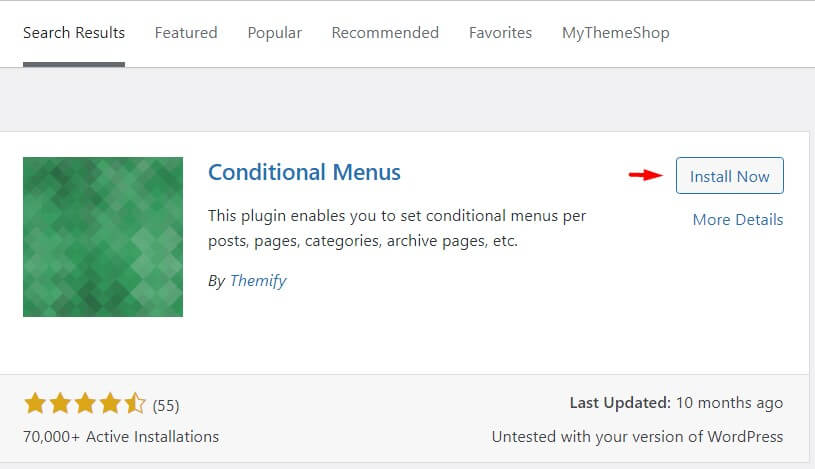
The Conditional Menus plugin enables WordPress site owners to swap, disable, or hide navigation bars across designated pages through conditional visibility rules. Administrators configure rules inside the standard WordPress menu locations interface without writing custom PHP scripts or editing core theme files.
Developed by the Themify team, this open-source utility boasts over 70,000 active installations. It operates seamlessly across nearly every modern theme without altering core database tables.
To begin, site managers install and activate the plugin through the WordPress admin directory. Check our operational tutorial on how to install a plugin on WordPress if you need assistance with plugin setup.
Once the plugin is activated, navigate to Appearance and select Menus in your admin dashboard. Click on the Manage Locations tab positioned at the top of the menu editor.
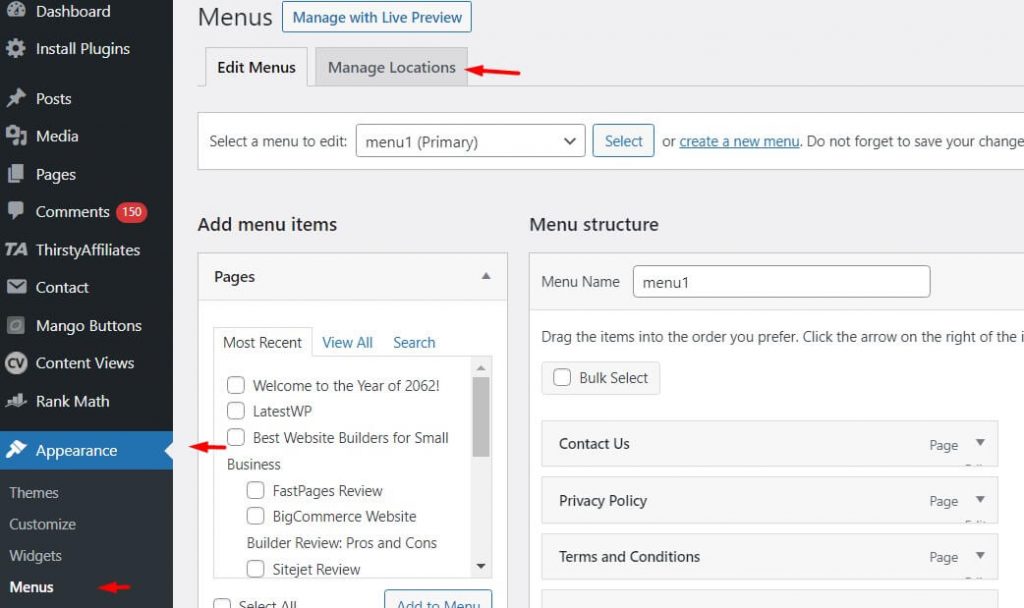
The screen reveals all registered theme menu locations alongside a new Conditions link. Click Conditions next to the primary or secondary menu you intend to modify.
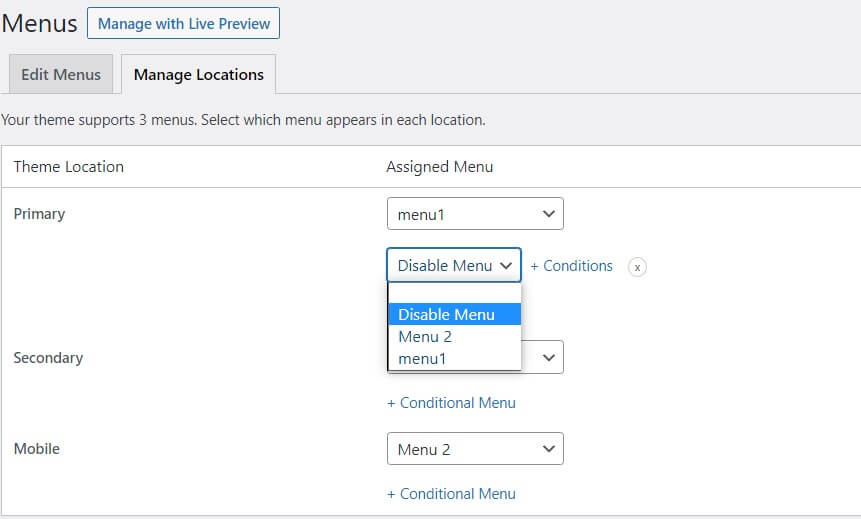
A popup window presents diverse filter options covering pages, blog posts, categories, user roles, and archive taxonomies. Locate the specific page or post where navigation should be suppressed.
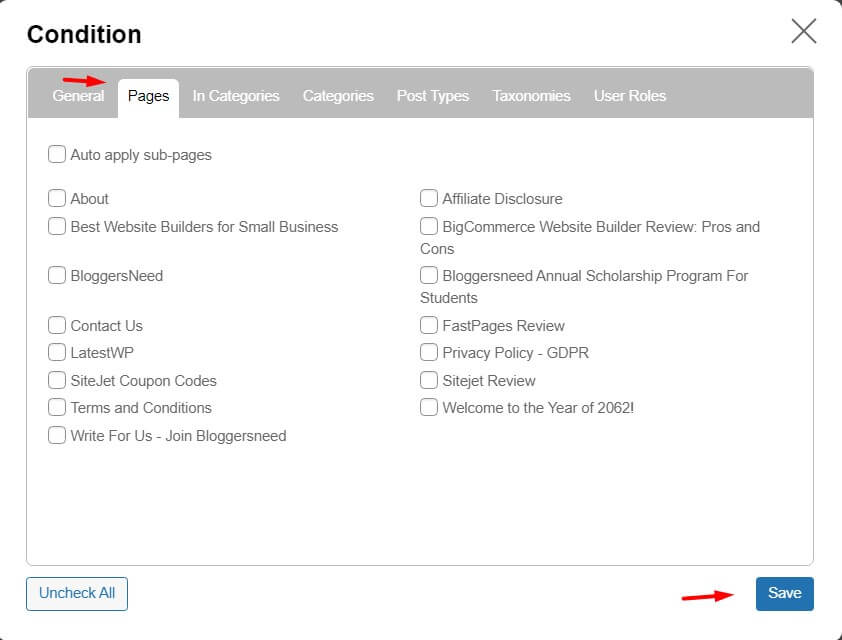
Check the target page boxes, choose Disable Menu from the dropdown selector, and click Save. The chosen URL immediately ceases displaying the navigation bar across desktop and mobile devices.
Method 2: Using Theme Settings to Hide Header Menu WordPress Page Layouts
Site owners configure theme settings to hide header menu WordPress page layouts directly inside the page editor. Popular themes like Astra, GeneratePress, and OceanWP provide dedicated layout toggles to disable primary headers, secondary navigation bars, and footers on individual published posts.
Modern themes incorporate per-page layout controls directly within the Gutenberg block editor sidebar. This native capability lets publishers suppress header elements without installing third-party plugins.
When selecting your foundational site framework, prioritize themes that support comprehensive layout toggles. Browse our benchmark guide to the best WordPress themes for high-performance options that include native header control.
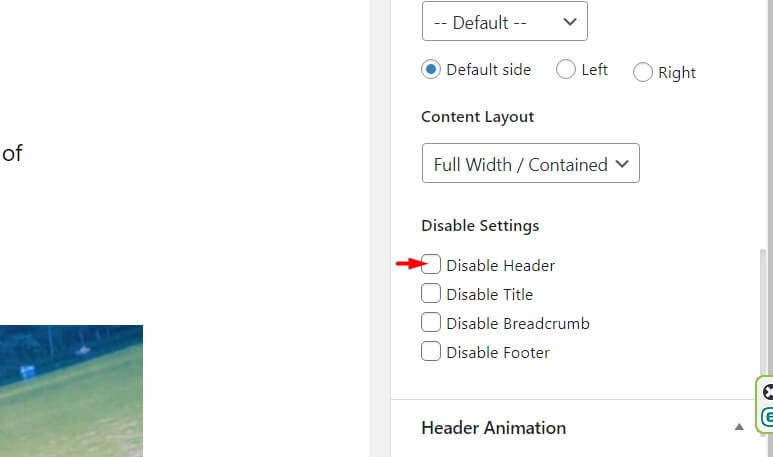
To use this native feature, open the target page in the WordPress block editor. Look at the right sidebar under the Page settings tab and locate Layout or Disable Elements.
Toggle the Disable Header checkbox on, which instantly strips the top navigation bar and site branding. You can also hide the footer in WordPress, breadcrumbs, and page titles from the same control panel.
Click Update to save your layout settings. Your published page now loads without header clutter while all other site URLs retain their normal navigation structure.
Method 3: How to Hide Menu on Specific Page WordPress Using Custom CSS
Learning how to hide menu on specific page WordPress templates with CSS gives site owners targeted styling control without installing extra plugins. By pairing the unique body page ID class with the navigation selector, custom rules suppress display while leaving sitewide menus intact.
Custom CSS overrides represent the cleanest execution path for performance-minded webmasters. A single CSS declaration suppresses the navigation container without adding database queries or external scripts.
Executing this technique requires finding the unique numeric ID assigned to your target post or page. Once identified, you combine that ID with your theme navigation selector to create an isolated rule.
Inspecting the HTML Source to Locate the Page ID
WordPress assigns a unique numeric identifier class to the body tag of every published page, post, and custom taxonomy. Site builders locate this ID by viewing the page source in any browser, searching for the postid or page-id class attribute inside the body markup.
To identify your page ID, open the target page in your web browser. Right click anywhere on the screen and select View Page Source from the context menu.
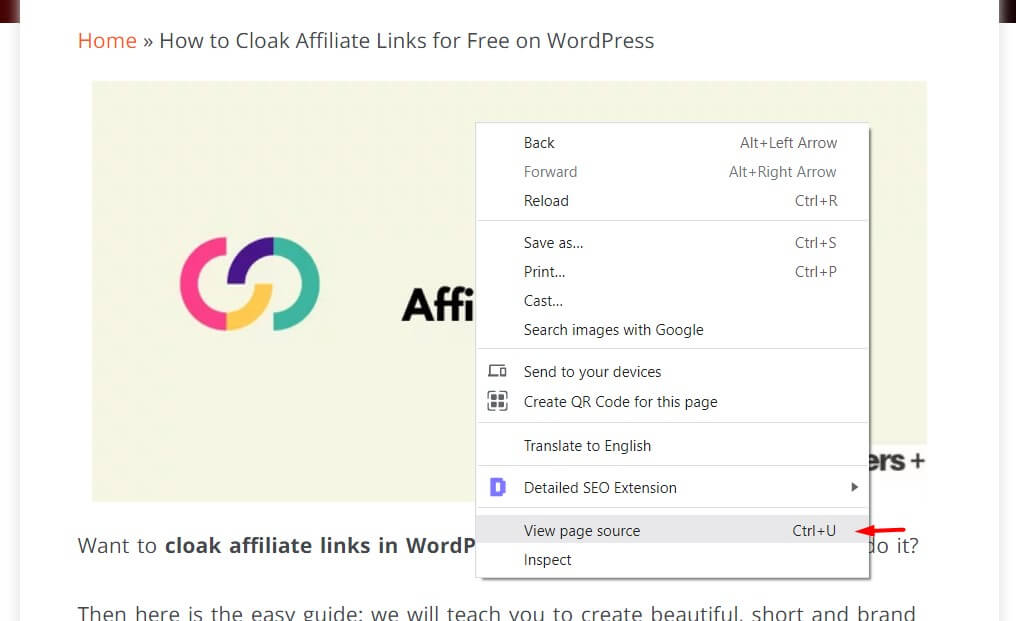
Once the HTML markup loads in a new browser tab, press CTRL + F on Windows or CMD + F on macOS. Enter postid or page-id into the search bar to locate the body class string.
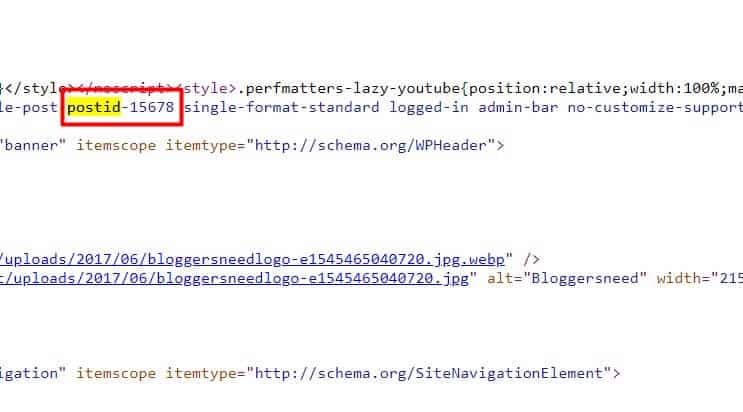
The search query highlights the exact identifier, such as postid-15678 or page-id-15721. Copy this numeric class for your custom stylesheet declaration.
Adding Targeted CSS Code to the WordPress Customizer
Applying display none declarations to specific page classes inside the WordPress customizer immediately hides navigation bars on targeted URLs. Administrators navigate to Appearance, open Customize, select Additional CSS, paste the targeted class declaration, and save changes to apply the clean styling rule.
Construct your CSS rule by pairing the body identifier with your theme navigation element selector. The standard snippet below demonstrates the syntax for secondary and primary navigation bars.
.postid-15678 #secondary-navigation,
.page-id-15721 .main-navigation {
    display: none !important;
}
Replace the sample numbers with your actual page or post identifier. If you wish to adjust header positioning instead of hiding items, review our guide on how to center menu in WordPress using CSS rules.
Paste your snippet into Appearance > Customize > Additional CSS and click Publish. Refresh the page to confirm that the targeted navigation container is completely removed from view.
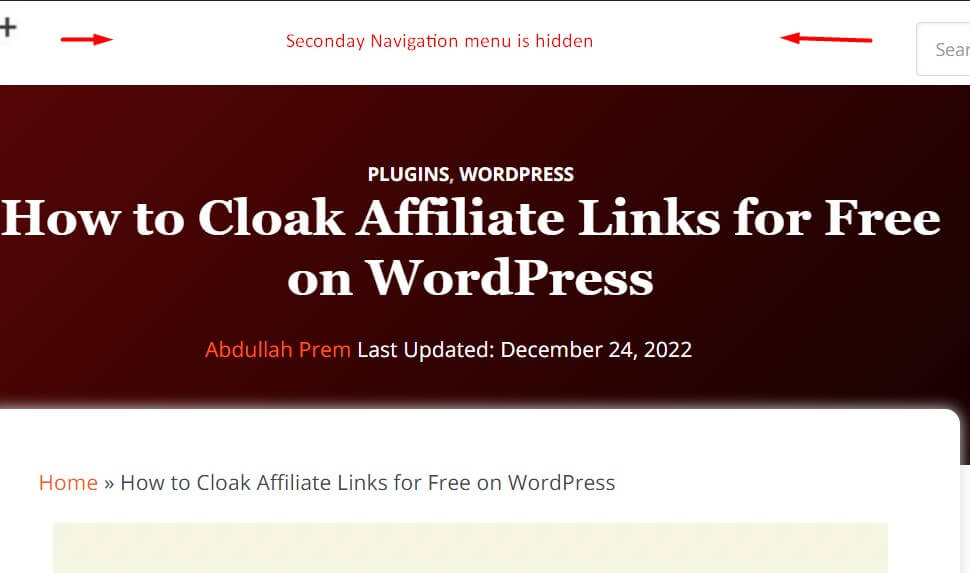
The navigation bar disappears instantly while leaving primary menus active across the remainder of your site. This surgical CSS approach requires zero ongoing plugin maintenance.
Method 4: How to Remove Menu from Landing Page WordPress Builds
Digital marketers remove menu from landing page WordPress assets to eliminate outbound navigation distractions and maximize conversion rates. Using blank canvas templates or full-site editing eliminates header elements so visitors focus exclusively on your sales copy, opt-in forms, and primary checkout buttons.
Dedicated landing pages perform best when visitors face only two choices: convert or exit. Navigation menus provide easy escape routes that dilute lead generation campaigns and paid ad spend.
Most landing page creators and block editors include a specialized Blank Page or Canvas template. In the block editor sidebar, look under Page Attributes and select Template.
Choose Elementor Canvas, Blank Page, or Landing Page from the dropdown menu. This setting instructs WordPress to render only the content canvas, completely ignoring your theme header, menus, and footer widgets.
If you build dedicated marketing funnels regularly, consider pairing WordPress with professional page construction software. Explore our verified comparison of the best landing page builders to evaluate dedicated template tools and conversion features.
Explore High-Converting WordPress Landing Page Builders
Deploying dedicated canvas templates ensures consistent responsive scaling across mobile devices. You avoid CSS specificity bugs and retain clean landing page layouts effortlessly.
Common Pitfalls When Hiding Menus on WordPress Pages
Hiding navigation bars improperly introduces mobile menu button leftovers, layout shifts, or broken internal crawl paths for search engine spiders. Technical teams must verify mobile viewport rendering, maintain breadcrumb alternatives, and ensure canonical links remain accessible to preserve search visibility and user orientation.
The most frequent mistake involves hiding the desktop navigation container while forgetting mobile hamburger buttons. Many themes store mobile toggles inside separate header containers, requiring dedicated CSS selectors.
Always inspect the target page using Chrome DevTools in responsive mobile emulation mode. Ensure that both horizontal link lists and mobile drawer toggles remain hidden.
Another pitfall stems from aggressive caching plugins that serve stale stylesheets to visitors. After publishing layout changes, always clear your server page cache and CDN edge caches.
Finally, never hide site navigation across your entire domain unless you provide clear alternate pathways. Search engines rely on contextual links to crawl your architecture and discover newly published posts.
Frequently Asked Questions About Hiding WordPress Menus
Addressing common questions regarding WordPress navigation visibility clarifies how administrators manage page layouts and custom templates. The following practitioner answers address mobile styling exceptions, SEO implications, block editor ID discovery, complete header removal, and browser caching conflicts during website design updates.
Website managers encounter unique operational hurdles when tweaking header visibility. Below are direct, tactical answers to the most common questions.
Can I hide the navigation menu on mobile devices only?
Administrators hide navigation menus exclusively on mobile screens using CSS media queries targeting specific viewport widths. By wrapping display none rules inside max-width media queries, menus disappear on mobile devices while remaining fully interactive on desktop monitors and traditional laptop screens.
Use a media query like @media (max-width: 768px) around your navigation selector inside Additional CSS. This ensures desktop readers retain navigation while mobile visitors experience a streamlined interface.
Will hiding the navigation menu affect my site SEO ranking?
Hiding a navigation menu on isolated landing pages will not harm search engine rankings, provided essential internal links exist across primary pillar templates. If you hide menus sitewide without XML sitemaps or alternative internal linking, search crawlers struggle to discover and index your subpages.
Search engines crawl pages according to your internal link architecture and sitemap submissions. Suppressing menus on specialized advertising pages or checkout funnels carries zero negative ranking impact.
How do I find the page ID in the modern WordPress block editor?
Site builders find the page ID by checking the browser address bar when editing the page inside the WordPress block editor. The URL contains a post parameter followed by a numeric value, which represents the exact ID needed for targeted CSS selectors.
Look at your browser URL bar while editing any page in WordPress admin. The string post=15721 identifies the precise number required for your page-id class override.
Can I remove both header and footer menus simultaneously?
Administrators remove both header and footer menus simultaneously by selecting a Canvas or Blank Page template in your theme settings. Alternatively, pairing header and footer element selectors inside a single display none CSS rule removes both navigation structures with one line of code.
Canvas templates provide the cleanest route by preventing header and footer scripts from loading altogether. This maximizes landing page loading speeds and eliminates all external navigation leaks.
Why does my navigation menu still appear after saving custom CSS?
Navigation menus continue appearing after saving custom CSS when browser caching, server-side caching, or CSS selector specificity conflicts override your rules. Purging caching plugin files, testing in an incognito window, or adding an important declaration resolves selector style inheritance conflicts immediately.
Check whether your theme uses higher-specificity selectors or unique container IDs. Purging your object cache, page cache, and browser cache ensures fresh CSS rules take effect immediately.
Related WordPress Tutorials and Design Guides
Exploring related WordPress tutorials helps administrators master custom site layouts, widget placements, and menu styling. Review our step-by-step technical guides to customize navigation alignment, insert interactive media widgets, embed location maps, and optimize responsive images across your active WordPress publishing site.
Deepen your WordPress technical skills by exploring our companion guides. Each tutorial provides practical workflows to customize your website design and improve user interaction.



I’m Abdullah Prem, a passionate blogger with over 10 years of experience. I created BloggersNeed to produce high-quality, easy-to-understand articles, guides, and tutorials that help people start their blogging journey. Specializing in WordPress, Hosting, Themes, and online money-making strategies, I’ve been featured on leading tech platforms such as Tech.co, Cloudways, Business2Community, Leadpages, GoodFirms, and ShareThis. BloggersNeed.com