
Landing pages optimization requires aligning headline messaging with visitor search intent, removing navigational clutter, displaying verifiable social proof, and positioning distinct call-to-action buttons in November 2026. These seven proven landing page conversion tips maximize revenue efficiency.
Strategic landing pages optimization framework illustrates core conversion pillars spanning clear value propositions, trust signals, and streamlined conversion pathways for 2026.
A landing page functions as a dedicated standalone web destination created specifically for marketing or advertising campaigns. Visitors arrive after clicking an organic search result, email link, or paid commercial advertisement.
Unlike standard website homepages that encourage exploration across numerous topics, effective landing pages focus exclusively on a single objective. That conversion goal typically entails capturing qualified sales leads or closing direct ecommerce transactions.
Executing continuous landing pages optimization turns expensive website traffic into reliable business revenue. Marketers who systematically refine page structure, messaging clarity, and visual presentation consistently outperform competitors in conversion efficiency.
Growth teams seeking reliable funnel software can examine our evaluated collection of the best landing page builders to construct conversion-ready page layouts rapidly.
Pairing structured page templates with actionable ecommerce conversion rate optimization tips prevents revenue leakage at vital checkout decision points.
Landing Page Optimization Best Practices Summary Matrix
Landing page optimization best practices require headline alignment, concise copywriting, frictionless architecture, verifiable social proof, high-contrast call-to-action buttons, and iterative split testing in November 2026. Executing these seven benchmarks transforms web traffic into paying customers while driving down customer acquisition expenditures.
Evaluating core conversion levers systematically helps marketing teams prioritize testing roadmaps based on prospective revenue impact.
The technical specifications and performance gains across all seven optimization disciplines are outlined below.
| Optimization Factor | Core Technical Standard | Observed Conversion Lift | Implementation Effort |
|---|---|---|---|
| 1. Goal Definition | 1:1 Attention Ratio (Single CTA path) | +20% to +35% conversions | Low |
| 2. Headline Alignment | 5-second message match from traffic source | +25% to +40% retention | Low |
| 3. Persuasive Copy | Benefit-first scannable bullet hierarchy | +15% to +30% engagement | Medium |
| 4. Streamlined Design | Zero header navigation menus, responsive CSS | +18% to +28% completions | Medium |
| 5. Social Proof | Real customer reviews, outcome metrics, badges | +34% buyer trust lift | Medium |
| 6. CTA Button Design | High-contrast orange/green, action microcopy | +22% to +45% click rate | Low |
| 7. A/B Testing | Single-variable tests with 95% statistical power | +30% to +100% annual growth | High |
1. Clearly Define Conversion Goals and Campaign Objectives
Defining a singular conversion goal requires isolating one specific visitor action per landing page rather than dividing attention across competing offers in November 2026. Single-purpose landing pages prevent choice overload, simplify user decision pathways, and increase sales conversion rates from traffic source to checkout.
Every commercial landing page must possess a distinct, measurable objective before any visual design begins. When visitors encounter competing calls-to-action, cognitive friction escalates, driving prospective buyers away from checkout completion.
Marketers frequently make the mistake of asking visitors to download an ebook, register for a webinar, and purchase a subscription on the exact same page. This fragmented approach destroys the critical 1:1 attention ratio required for peak conversion efficiency.
Establish whether your landing page aims to generate marketing-qualified leads, schedule sales discovery calls, or process credit card payments immediately. Aligning the entire visual and textual hierarchy behind that sole outcome guarantees focused visitor progress.
Setting specific numerical benchmark metrics allows growth teams to gauge campaign health accurately. Tracking conversion rates against past baseline performance isolates exactly how structural improvements influence revenue generation.
2. Optimize Landing Page Headlines for Instant Relevance
Marketers optimize landing page headlines by stating the primary customer benefit within five seconds of visitor arrival using clear problem-solving language in November 2026. Compelling headlines reinforce campaign promises, establish immediate contextual relevance, and prevent bounce by confirming visitors reached the right commercial solution.
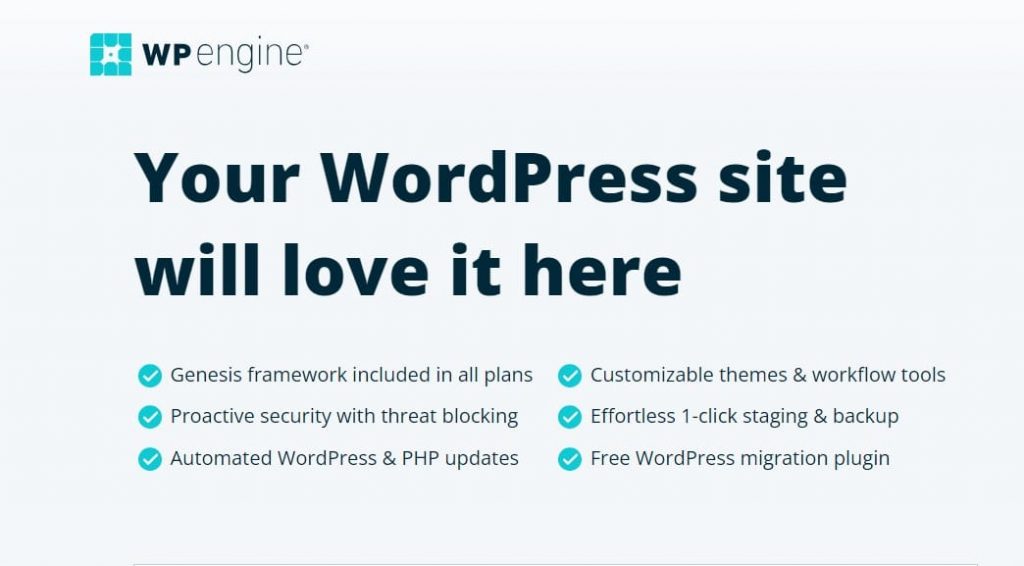
Effective landing page headline example demonstrates clear value proposition framing, high contrast typography, and immediate service clarity.
Visitors form first impressions about a landing page within milliseconds of arrival. If the primary headline fails to resonate with user search intent immediately, prospects bounce back to search engine results pages.
To optimize landing page headlines effectively, pair a bold value proposition statement with an informative supporting sub-headline. The primary headline hooks user attention with the ultimate outcome, while the sub-headline clarifies execution details.
Three proven headline formulas consistently generate superior engagement across commercial campaigns.
- Pain-Point Eradication: Highlight the specific operational obstacle your software or service eliminates for the buyer.
- Quantified Outcome: Present exact numerical metrics demonstrating time saved, revenue increased, or overhead reduced.
- Competitive Advantage: Position your distinct capability directly against legacy alternatives to establish premium market superiority.
Maintain strict message match between your traffic acquisition sources and your landing page headline. When an advertising banner promises a specific discount, repeating that promise verbatim in the headline eliminates cognitive hesitation.
3. Craft Persuasive Copywriting That Solves Customer Pain Points
Persuasive copywriting increases sales conversions by translating technical product features into tangible customer benefits and addressing specific user objections in November 2026. Clear formatting using scannable bullet points, active verbs, and conversational practitioner prose helps visitors quickly digest value propositions without suffering cognitive fatigue.
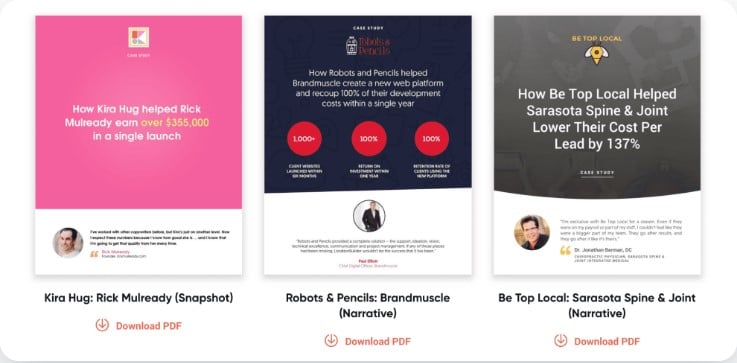
Persuasive copywriting samples highlight benefit-driven bullet structures, concise customer value delivery, and active readability formatting.
High-converting sales copy speaks directly to reader pain points rather than droning on about abstract corporate features. Instead of listing technical specifications in isolation, explain how each capability saves money or solves bottlenecks.
Practitioners studying customer interview methodologies from Copyhackers discover that borrowing verbatim customer phrases produces the most persuasive sales prose. Voice-of-customer research uncovers exact objections that need refutation.
Structure your copy using the Problem-Agitate-Solve framework. First, articulate the painful friction your prospect experiences daily. Next, illustrate the compounding cost of inaction, and introduce your product as the natural remedy.
Organize body copy into bite-sized paragraphs of two to three lines each. Incorporate bulleted lists with bold lead-in concepts to facilitate effortless scanning on both mobile screens and desktop monitors.
Anticipate buyer skepticism by addressing pricing, implementation timelines, and security safeguards directly within the body copy. Resolving objections proactively removes friction before prospects reach the purchase decision point.
4. Streamline Visual Design and Mobile Navigation Layouts
Streamlining landing page design involves eliminating distracting navigation menus, maximizing functional white space, and enforcing responsive mobile styling in November 2026. Minimalist visual hierarchy directs user visual scanning patterns toward primary conversion assets while reducing page load times and mobile rendering friction.
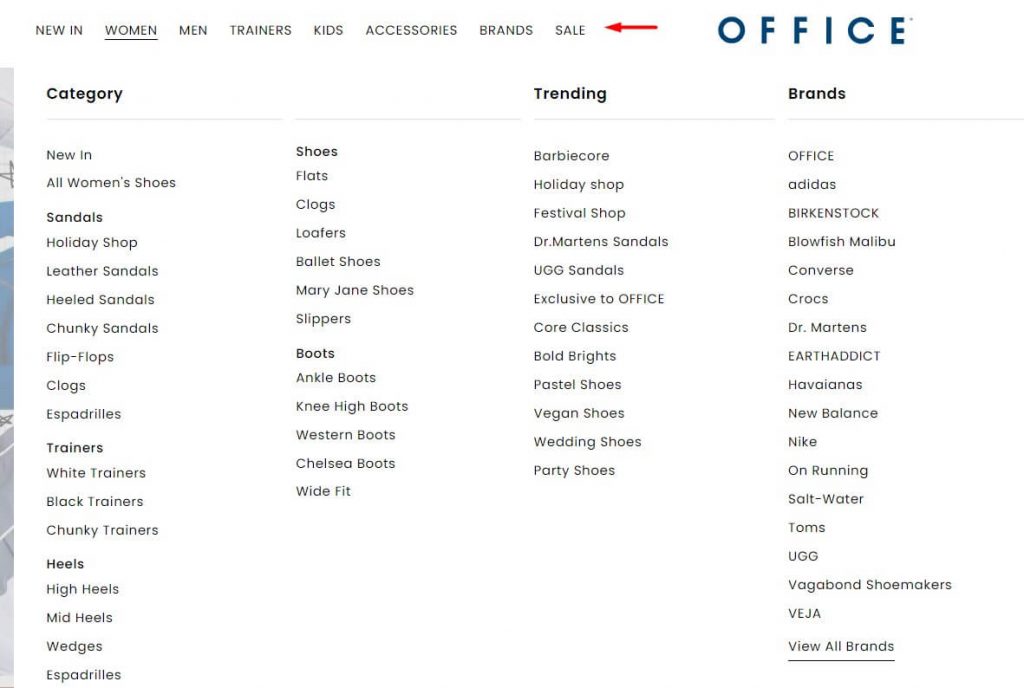
Clean navigation architecture illustrates structured hierarchy, logical product categorization, and visual spacing that prevents user disorientation.
Cluttered landing pages with complex header menus, sidebars, and outbound social media icons divert attention from primary conversion goals. Every outbound navigation link represents a potential exit route where prospective revenue leaks away.
Removing top header navigation bars frequently lifts landing page conversion rates by 15% to 28%. When visitors have only two choices (convert or leave), the probability of conversion rises dramatically.
Adhering to principles of responsive ecommerce design ensures that visual elements reformat gracefully across smartphone viewports. Over half of global web traffic originates from mobile devices, making mobile responsiveness mandatory.
Employ generous white space surrounding critical value propositions, imagery, and interactive forms. Ample negative space guides the visitor eye down the page naturally without overwhelming reader senses.
Ensure typography maintains strong visual contrast against background colors. Use minimum 16-pixel body font sizes with clean sans-serif typefaces to guarantee effortless legibility under diverse lighting conditions.
5. Incorporate High-Trust Social Proof and Real Customer Reviews
Incorporate social proof on landing pages by showcasing verified buyer testimonials, third-party review badges, client logos, and statistical customer results in November 2026. Demonstrating authentic third-party validation neutralizes perceived buyer risk, establishes merchant credibility, and persuades hesitant prospects to complete high-value transactions confidently.
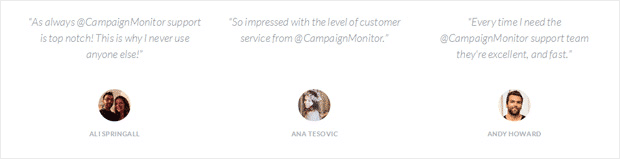
Social media proof screenshot shows real-time user validation, customer brand advocacy, and authentic engagement signals.
Modern consumers exhibit deep skepticism toward unverified marketing claims. When prospective customers evaluate a commercial solution, they seek independent verification from peers who have successfully resolved comparable challenges.
Displaying authentic customer testimonials complete with full names, company titles, and headshot photographs generates immediate credibility. Specific reviews detailing measurable outcomes convert far more effectively than generic praise statements.
Four primary forms of high-impact social proof should be positioned across landing page layouts.
- Customer Testimonials: Narrative quotes describing specific financial or operational transformations achieved with your service.
- Industry Client Badges: Recognizable brand logos illustrating established enterprise partnerships and widespread market adoption.
- Third-Party Rating Aggregators: Embedded review badges from Trustpilot, G2, or Google Customer Reviews showing live star averages.
- Quantitative User Milestones: Real-time statistics detailing active customer accounts, transactions processed, or positive outcomes delivered.
Place micro-testimonials directly adjacent to form fields and pricing tables. Positioning reassuring peer feedback near high-friction commitment zones comforts buyers at the exact moment purchase doubts arise.
6. Optimize Call-to-Action (CTA) Buttons for Maximum Visual Prominence
Optimizing call-to-action buttons requires selecting high-contrast accent colors, writing first-person action verbs, and maintaining minimum 48-pixel touch targets in November 2026. Prominent CTA buttons isolate primary conversion goals, eliminate tap friction on mobile smartphones, and provide distinct visual momentum that accelerates checkout completions.
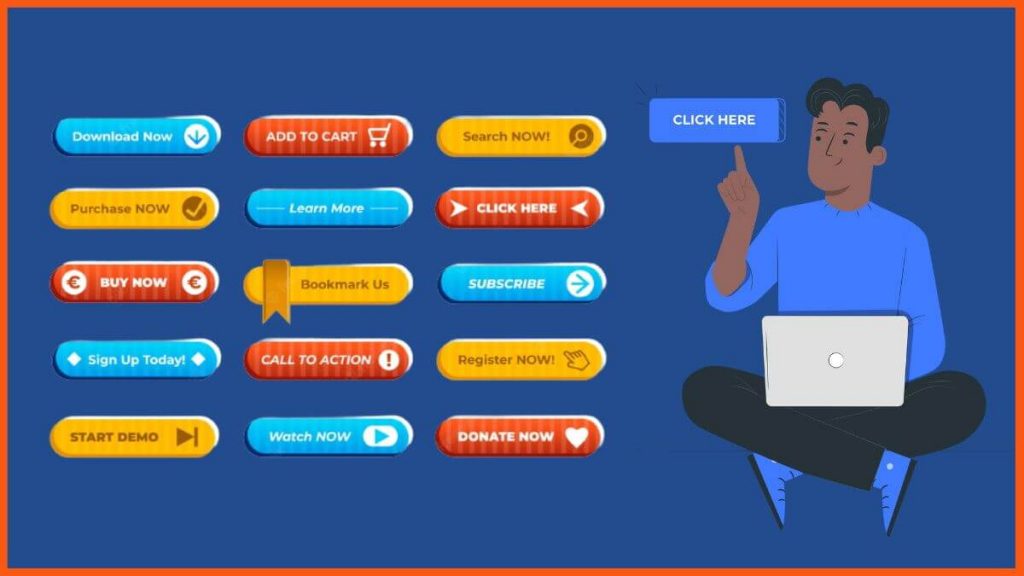
High-contrast Call-to-Action button examples showcase prominent color isolation, directional clarity, and conversion-focused microcopy.
The call-to-action button represents the definitive gateway where reader interest converts into commercial value. If a button blends into surrounding page aesthetics or features generic labeling, conversion volume drops sharply.
Growth teams refining button design parameters can study our detailed analysis of CTA button best practices to master color isolation and hover micro-animations.
Choose high-contrast colors like vivid orange (#FF6B00) or bold green that stand out starkly against white and gray background palettes. Maintain a minimum contrast ratio of 4.5:1 to fulfill accessibility guidelines.
Replace passive labels like “Submit” or “Click Here” with compelling first-person action phrases. Copy formulas such as “Claim My 30-Day Free Trial” or “Get Instant Access Now” increase user motivation significantly.
Ensure button sizing accommodates mobile touchscreen navigation comfortably. Adhering to minimum 48-pixel height dimensions prevents accidental mis-taps on mobile smartphone displays.
7. Implement Rigorous A/B Testing and Split Testing Iterations
Implementing rigorous A/B testing involves running controlled experiments that isolate single variables across headlines, hero imagery, form fields, and CTA buttons in November 2026. Continuous split testing replaces subjective assumptions with statistical empirical data, generating compound conversion rate gains and measurable sales revenue growth.
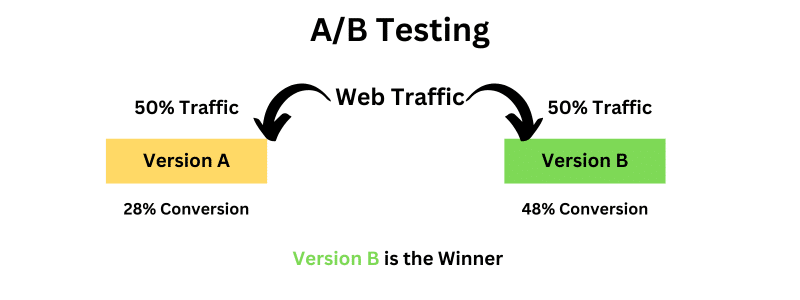
A/B testing architecture diagram depicts traffic split distribution between control and challenger landing page variants.
Landing page optimization is an ongoing empirical discipline rather than a one-time project. What resonates with one target demographic may underperform with another audience segment.
Applying structured A/B testing techniques enables growth teams to split incoming traffic between a control page (A) and a challenger variant (B) simultaneously.
Maintain scientific discipline by modifying only one element per split test experiment. When you test a new headline alongside revised hero imagery simultaneously, determining which modification generated the performance shift becomes impossible.
Gather sufficient sample volume before declaring test outcomes. Ensure experiments achieve 95% statistical significance to prevent making costly marketing adjustments based on random data noise.
Document experiment findings systematically inside a testing repository. Accumulated testing insights inform future marketing campaigns, generating compound conversion rate improvements across your entire sales funnel.
Top Landing Page Builders for Conversion Rate Optimization
Specialized landing page builders accelerate conversion optimization by delivering pre-tested responsive templates, built-in multivariate split testing engines, and drag-and-drop visual editors in November 2026. Deploying dedicated software enables marketers to launch, test, and refine high-converting landing pages rapidly without writing custom web development code.
Selecting the right page building platform simplifies campaign deployment and testing workflows substantially.
Two industry-leading software solutions consistently provide advanced conversion optimization capabilities for modern growth teams.
Unbounce Conversion Intelligence Platform
Unbounce provides enterprise-grade landing page optimization through automated smart traffic routing, dynamic text replacement, and native A/B testing tools in November 2026. The platform routes paid advertising visitors to the highest-converting variant based on behavioral attributes, maximizing return on ad spend.
Unbounce features a flexible drag-and-drop builder allowing complete visual customization down to individual pixels. Its Smart Traffic AI engine analyzes visitor demographics and automatically sends prospects to the page variant most likely to convert.
With built-in popups, sticky navigation bars, and accelerated mobile page (AMP) support, Unbounce equips performance marketers with comprehensive conversion optimization infrastructure.
Leadpages High-Converting Template Builder
Leadpages offers code-free landing page creation with real-time conversion guidance, lead magnet delivery automation, and built-in checkout payments in November 2026. The intuitive drag-and-drop editor allows creators and small business owners to publish high-speed lead funnels and sales pages within minutes of setup.
Leadpages provides hundreds of conversion-tested industry templates optimized for mobile responsiveness. Its proprietary Leadmeter tool grades page elements in real time, offering actionable suggestions to strengthen conversion power before publishing.
Integrated payment processing via Stripe enables direct digital product sales without requiring complex third-party shopping cart installations.
Start 14-Day Free Leadpages Trial
Essential Landing Page Conversion Tips Checklist
Essential landing page conversion tips center on auditing page load velocity, trimming unnecessary form inputs, and securing customer data with SSL encryption in November 2026. Following a structured pre-launch quality checklist ensures every technical, visual, and psychological conversion element performs smoothly before scaling ad spend.
Executing a pre-flight technical audit prevents avoidable user friction and maximizes paid campaign profitability.
The core landing page conversion tips checklist below covers essential verification checkpoints before scaling ad spend.
| Optimization Checkpoint | Target Standard | Verification Procedure |
|---|---|---|
| Page Load Speed | Under 2.0 seconds Largest Contentful Paint (LCP) | Audit via Google PageSpeed Insights |
| Form Field Length | 3 to 5 fields maximum for initial lead capture | Remove non-essential qualifying questions |
| Mobile Viewport Testing | Zero horizontal scroll, 48px touch targets | Inspect in Chrome Developer Tools device mode |
| SSL & Security Badges | HTTPS certificate, PCI-DSS payment compliance | Verify padlock icon and payment gateway scripts |
| Analytics Tracking | GA4 custom conversion events & Meta Pixel firing | Confirm event firing via Google Tag Assistant |
Frequently Asked Questions About Landing Pages Optimization
Frequently asked questions regarding landing pages optimization address target conversion rates, mobile usability standards, headline testing frequency, and essential software platforms in November 2026. Reviewing these verified answers clarifies technical execution nuances and helps growth teams avoid common conversion rate optimization pitfalls.
Understanding fundamental CRO principles helps performance teams prioritize resources on high-yield testing initiatives.
Detailed technical answers to common landing page optimization questions are provided below.
What is an acceptable average conversion rate for a sales landing page?
An acceptable average conversion rate for sales landing pages typically ranges between 2.35% and 5.31% across major industry verticals in November 2026. Top-performing landing pages achieve conversion rates of 11.45% or higher by maintaining strict message match and ruthless friction elimination.
Conversion benchmarks vary significantly based on industry niche, product price point, and traffic temperature. Low-friction lead magnets naturally register higher conversion percentages than enterprise software subscriptions costing thousands annually.
How can marketers optimize landing page load speed for mobile devices?
Marketers optimize landing page load speed by compressing images with WebP formats, implementing browser caching, minifying CSS scripts, and utilizing content delivery networks in November 2026. Mobile landing pages loading under two seconds achieve higher conversion rates and lower ad abandonment than slower competitor sites.
Research confirms that every one-second delay in mobile page load time reduces conversions by up to 7%. Compressing high-resolution photography and deferring non-essential third-party tracking scripts prevents rendering lag on cellular networks.
Which landing page conversion tips yield the fastest sales increase?
The fastest landing page conversion tips involve clarifying the primary headline promise, eliminating the navigation menu bar, and adding high-contrast CTA buttons in November 2026. Removing navigational distraction channels visitor attention exclusively toward the checkout pathway, creating an immediate measurable uplift in sales transactions.
Shortening multi-step forms down to essential fields also delivers swift performance gains. Requiring only an email address and payment details removes cognitive friction, allowing prospective buyers to finalize orders quickly.
Why are landing page optimization best practices vital for paid ad campaigns?
Landing page optimization best practices improve Google Ads Quality Scores, lower cost-per-click charges, and maximize commercial return on advertising spend in November 2026. High-converting landing pages ensure paid traffic converts efficiently, lowering customer acquisition costs and allowing marketing teams to scale profitable ad campaigns aggressively.
Ad platforms penalize campaigns that direct users to slow, disjointed landing pages with high bounce rates. Optimizing page relevance and mobile responsiveness raises ad placement rank while decreasing overall marketing expenditures.
Strategic Final Verdict on Landing Pages Optimization
Executing systematic landing pages optimization transforms advertising traffic into sustainable, predictable business revenue by removing conversion friction and building prospect trust in November 2026. Continuous experimentation across headlines, value propositions, and calls-to-action guarantees persistent sales improvements and compounding competitive market advantages.
Treat landing page optimization as a continuous scientific journey rather than an isolated website tweak. Consistent iterative improvements to copy, visual layout, and social validation compound into substantial sales gains over time.
Begin by establishing clear conversion goals, refining headline clarity, and eliminating unnecessary visual clutter. Once baseline metrics stabilize, launch methodical A/B split tests to achieve the next plateau of sales conversion performance.

I’m Abdullah Prem, a passionate blogger with over 10 years of experience. I created BloggersNeed to produce high-quality, easy-to-understand articles, guides, and tutorials that help people start their blogging journey. Specializing in WordPress, Hosting, Themes, and online money-making strategies, I’ve been featured on leading tech platforms such as Tech.co, Cloudways, Business2Community, Leadpages, GoodFirms, and ShareThis. BloggersNeed.com