
Quick Verdict: Best WordPress Backup Plugins for 2026
Choosing the best backup plugin for wordpress depends on website architecture and data velocity. For mission-critical WooCommerce stores and dynamic publishers, Solid Backups delivers reliable real-time incremental snapshots. For standard blogs and corporate sites, UpdraftPlus provides dependable free cloud options in November 2026.
Backups serve as essential insurance policies against malicious intrusions, server outages, and broken theme updates.
A dedicated wordpress backup plugin automates database snapshots and cloud offloading without manual intervention.
Learning how to backup wordpress site files securely prevents devastating data loss across your web properties.
Website crashes, malicious script injections, and broken plugin updates can instantly erase years of published content.
WordPress powers over forty percent of all active websites, making it the primary target for automated hacking attempts.
Deploying one of the best wordpress backup plugins ensures rapid restoration whenever fatal errors occur.
While many web hosts offer server-level backups, storing copies on the same infrastructure leaves your business vulnerable.
Webmasters should review our curated guide on the best wordpress security plugins to establish proactive perimeter defenses alongside off-site backups.
Pairing secure backup automation with high-performance infrastructure from our best wordpress hosting directory creates a resilient foundation for digital growth.
If your website experiences unexpected downtime or white-screen errors, our tutorial on how to fix fatal errors on WordPress provides practical troubleshooting steps.
The visual comparison demonstrates how reliable WordPress backup plugins archive core files and database records to secure remote cloud destinations in November 2026.
Best WordPress Backup Plugins to Restore Your Websites in 2026
The best wordpress backup plugins protect digital assets against database corruption, security breaches, server outages, and update incompatibilities. Modern backup tools provide automated cloud offloading, incremental tracking, and disaster recovery. Deploying an effective wordpress backup plugin ensures your published records remain secure in November 2026.
Selecting the best backup plugin for wordpress requires evaluating storage options, backup frequency, and server resource consumption.
Budget shared hosting accounts can crash when processing massive zip archives during peak traffic hours.
Modern solutions mitigate this risk through incremental file tracking and dedicated cloud processing engines.
Below is an architectural breakdown of the ten top backup solutions tested across live WordPress installations.
| Plugin Name | Backup Method | Storage Destinations | Incremental Sync | Best Used For |
|---|---|---|---|---|
| Solid Backups | Incremental & Scheduled | SolidWP Stash, S3, Dropbox | Yes | Agencies & Publishers |
| Jetpack VaultPress | Real-time Cloud Sync | Automattic Cloud Storage | Yes | Hands-off Site Owners |
| UpdraftPlus | Scheduled & Manual | Google Drive, Dropbox, S3 | Premium Only | Standard Blogs & Sites |
| My WP Backup | Scheduled Archives | Google Drive, Dropbox, FTP | No | MyThemeShop Users |
| BackWPup | Scheduled Cron Jobs | S3, FTP, Dropbox, Rackspace | Pro Only | Custom Server Setups |
| WP Database Backup | Database Snapshots | Email, Drive, Dropbox, S3 | No | Lightweight SQL Backups |
| WP Backup to Dropbox | Automated Dropbox Sync | Dropbox OAuth | No | Dropbox Account Owners |
| Backup Guard | Chunked File Uploads | Cloud & Local Storage | No | Shared Hosting Accounts |
| Backup & Restore Dropbox | Cloud & Local Copies | Dropbox Cloud | No | Staging & Migrations |
| BlogVault | Off-site Real-time Engine | Dedicated Cloud Servers | Yes | WooCommerce & High Traffic |
1. Solid Backups (Formerly BackupBuddy)
Solid Backups is a premier standalone wordpress backup plugin engineered for publishers and agencies. It delivers automated incremental backups, off-site storage to SolidWP Stash or S3, and instant site restoration. Webmasters rely on its activity timeline to inspect archives and rollback files in November 2026.
Solid Backups was built by the security specialists at SolidWP, formerly recognized across the ecosystem as BackupBuddy.
The plugin excels at optimizing host resource consumption by utilizing smart incremental snapshot technology.
After compiling the initial baseline archive, subsequent backup runs capture only newly modified files and updated database tables.
This incremental approach drastically reduces server memory strain, preventing timeouts on crowded hosting environments.
The centralized Activity Timeline gives administrators complete visibility into scheduled backup events, file sizes, and execution durations.
Restoring a compromised website takes a single click from the administrative console or through independent emergency restore scripts.
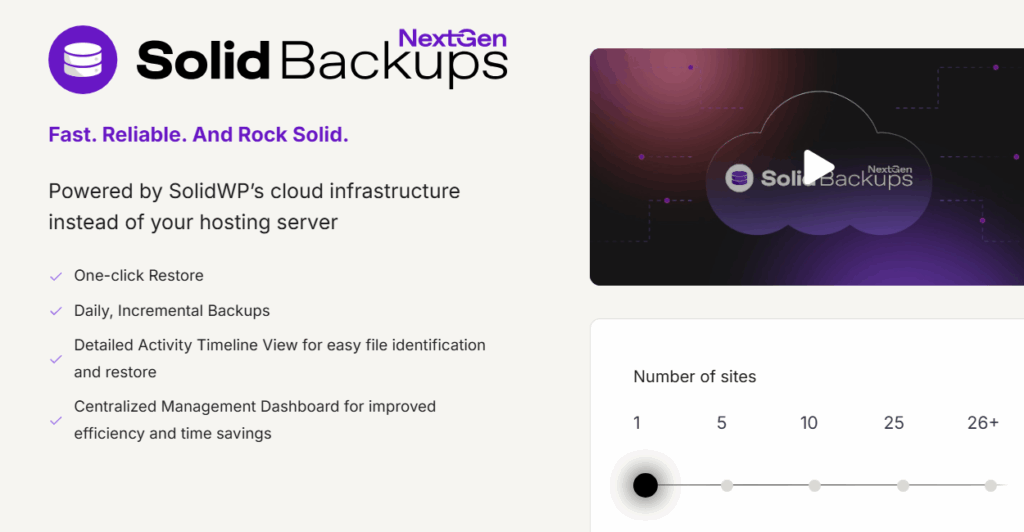
The Solid Backups control panel enables granular scheduling, automatic archive versioning, and off-site cloud delivery across verified destinations in November 2026.
Get SolidWP Backup Discount Now
2. Jetpack VaultPress Backup
Jetpack VaultPress Backup provides real-time automated cloud snapshots managed directly on the secure infrastructure of Automattic. Every post revision and media upload saves immediately without burdening your host server. Site owners can easily backup wordpress site files and initiate point-in-time recoveries in November 2026.
VaultPress operates as a dedicated cloud service built by the core contributors behind the WordPress publishing software.
Because all backup heavy lifting occurs on Automattic server infrastructure, your live site maintains peak front-end speed.
The platform maintains automated daily or real-time event logs, allowing webmasters to rewind content changes to precise timestamps.
Integrated security scans check core files continuously for known malware signatures and malicious backdoor scripts.
VaultPress also integrates seamlessly with Akismet, preventing comment spam engines from bloating your MySQL database tables.
Publishers can review official pricing and subscription packages directly on Vaultpress.

The VaultPress management screen displays automated activity logs, real-time security alerts, and point-in-time website rewind options in November 2026.
3. UpdraftPlus WordPress Backup Plugin
UpdraftPlus stands out as the best backup plugin for wordpress when prioritizing versatility, adoption, and free cloud destinations. The plugin facilitates scheduled archives sent to Google Drive and Dropbox. Its straightforward interface simplifies site cloning, migrations, and selective component restores in November 2026.
UpdraftPlus has surpassed three million active installations, making it the most popular wordpress backup plugin available.
The free version delivers robust functionality that meets the operational needs of most personal websites and content blogs.
Administrators can schedule file backups and database backups on completely separate recurring time intervals.
For example, you can back up your database every twelve hours while archiving theme and plugin files weekly.
UpdraftPlus splits large archives into manageable chunks, preventing HTTP upload timeouts when transferring files to cloud providers.
The premium edition unlocks incremental backup capability, automatic pre-update snapshots, database encryption, and advanced multisite network support.

The UpdraftPlus configuration screen displays connected cloud destinations, upcoming scheduled jobs, and one-click restoration archives in November 2026.
4. My WP Backup
My WP Backup is a practical wordpress backup plugin created by MyThemeShop to deliver scheduled and manual protection for blog files. It safeguards website assets against host crashes and server loss by dispatching zip archives to Dropbox and Google Drive automatically in November 2026.
Developed by the engineering team at MyThemeShop, this plugin focuses on straightforward usability and lightweight execution.
Publishers using MyThemeShop products can explore our detailed MyThemeShop review and framework analysis to understand theme performance integration.
My WP Backup allows webmasters to choose between complete website archives and targeted database-only snapshots.
The system supports split-archive compilation, ensuring successful backup creation even on low-memory shared hosting servers.
Users can schedule recurring background jobs that transmit backup files to external cloud accounts while traffic is low.
Email notifications alert site administrators instantly whenever a backup job completes successfully or encounters transfer errors.
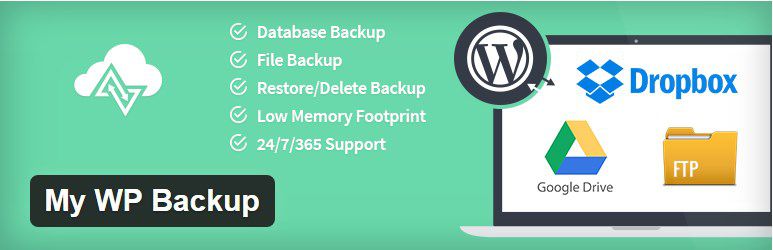
The My WP Backup interface streamlines scheduled archive configuration and automated cloud dispatch across personal storage repositories in November 2026.
5. BackWPup: WordPress Backup Plugin
BackWPup is a flexible open-source utility that ranks among the best wordpress backup plugins for webmasters seeking archive control. It allows users to export XML data, optimize tables, and transfer zip archives directly to external FTP servers, Dropbox, and cloud storage in November 2026.
Developed by Inpsyde, BackWPup powers over five hundred thousand active websites with dependable scheduling tools.
The plugin includes built-in database optimization tools that check and repair relational database tables before compiling archives.
Site administrators can generate standard WordPress XML export files alongside comprehensive raw SQL dumps.
Archive formats include zip, tar, and tar.gz compression, allowing developers to match archive types to server unzipping capabilities.
BackWPup supports external FTP, FTPS, SFTP, Amazon S3, Google Cloud, Dropbox, and Rackspace Cloud repositories.
Learn more about enterprise features and stand-alone restore wizards by visiting BackWPup.
The BackWPup job builder enables custom file exclusion rules, database table optimization, and off-site destination routing in November 2026.
6. WP Database Backup
WP Database Backup is a lightweight tool focused entirely on safeguarding MySQL tables without overburdening server memory. Administrators can generate immediate database dumps with a single click or schedule recurring cron backups sent via email, Google Drive, and Amazon S3 in November 2026.
Because database records contain all text content, user credentials, and configuration settings, regular SQL backups are vital.
WP Database Backup eliminates the complexity of full-site archiving by concentrating strictly on core database health.
Generating a lightweight database backup takes seconds and consumes minimal CPU cycles compared to compressing heavy image libraries.
The plugin allows automated daily, weekly, or monthly cron scheduling with automatic archive rotation to conserve remote disk space.
Site operators can download SQL dumps directly or initiate simple one-click database restorations from the administrative dashboard.
Download the official open-source extension directly from the WordPress repository via WP database backup.
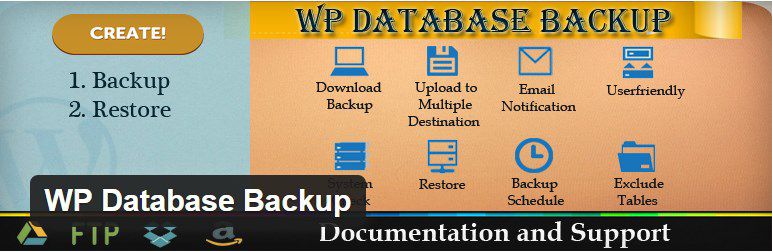
The WP Database Backup settings console provides straightforward manual snapshot controls and automated cloud synchronization settings in November 2026.
7. WordPress Backup to Dropbox
WordPress Backup to Dropbox simplifies file archiving by routing website content and SQL dumps directly to cloud storage. Utilizing secure OAuth verification, the plugin avoids storing sensitive credentials on your local installation, ensuring continuous automated synchronization on daily or weekly schedules in November 2026.
Connecting your publishing environment to personal cloud storage ensures safe off-site preservation without recurring service fees.
The plugin integrates with personal or business accounts managed on Dropbox via OAuth tokens.
Site administrators can designate specific folders within their Dropbox account to organize snapshot archives cleanly.
Granular exclusion filters let you omit unnecessary cache files, staging logs, and raw video files from backup jobs.
Automated scheduling allows backups to run in the background during low-traffic windows to maintain site responsiveness.

The WordPress Backup to Dropbox settings page illustrates OAuth connection status, destination folder paths, and exclusion filters in November 2026.
8. Backup Guard
Backup Guard is a dependable wordpress backup plugin providing comprehensive file archiving, custom exclusion rules, and automated cloud sync. Designed with chunked data processing, it runs smoothly on budget hosting environments without timing out, allowing users to backup wordpress site data securely in November 2026.
Backup Guard includes an intuitive dashboard that makes backup creation, restoration, and migration accessible to beginners.
The plugin processes large sites by segmenting data into smaller packets, preventing PHP execution limit errors.
Users can back up the complete website, isolate the database, or create custom archives containing specific subdirectories.
Its restoration engine operates directly inside the dashboard, rolling back database tables and files smoothly.
External cloud destinations include Dropbox, Google Drive, Amazon S3, and Microsoft OneDrive for safe remote retention.
Review additional technical details and enterprise site migration options on Backup Guard.
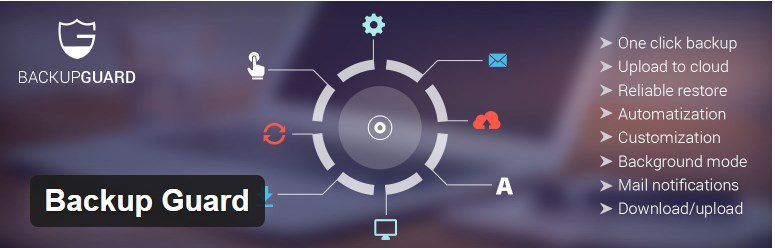
The Backup Guard interface provides real-time progress indicators, custom file inclusion settings, and multi-cloud sync options in November 2026.
9. Backup & Restore Dropbox
Backup and Restore Dropbox delivers straightforward site preservation by combining local server storage with automated Dropbox integration. The plugin enables website owners to execute unlimited backups, perform emergency restores, and clone entire website installations for staging development without requiring complex technical configurations in November 2026.
With thousands of active installations, this plugin is tailored for webmasters who prioritize simple Dropbox integration.
It provides unlimited local archives alongside unlimited cloud transfers, ensuring multiple redundant restore points.
The built-in cloning module allows users to migrate WordPress installations across servers without manual database export steps.
Site administrators can download full zip archives directly to local workstations for offline cold-storage redundancy.
Access the free plugin repository listing directly on the WordPress directory at Backup & Restore Dropbox.

The Backup and Restore Dropbox control console displays available local archives, Dropbox sync status, and one-click site clone tools in November 2026.
10. BlogVault Real-time Backup
BlogVault Real-time Backup is an enterprise SaaS backup system that handles all archive processing on dedicated servers. It guarantees zero server load on your host while capturing real-time WooCommerce orders and publishing changes. Webmasters consider it the best backup plugin for wordpress in November 2026.
Unlike traditional plugins that compile zip files using your web host CPU, BlogVault offloads all tasks to external servers.
This off-site architecture prevents site slowdowns, server memory spikes, and fatal timeouts during backup creation.
For eCommerce stores, BlogVault captures transactions and customer registrations the instant they happen via webhook listeners.
The platform maintains a complete thirty to three-hundred-sixty-five-day backup history with instant point-in-time restoration.
BlogVault also includes an integrated staging environment that allows you to test plugin updates before merging changes live.
Discover real-time synchronization plans and malware removal features by visiting BlogVault.

The BlogVault centralized dashboard provides independent off-site backup oversight, one-click staging setup, and real-time transaction sync in November 2026.
Why WordPress Websites Need Backups?
WordPress websites require routine backups because unexpected server failures, malware infections, failed plugin updates, and user errors can destroy site data instantly. Having current off-site backup archives ensures fast disaster recovery, eliminating lost sales, broken layouts, and expensive technical repair bills in November 2026.
Every website owner eventually encounters a scenario where site files corrupt or administrative logins become inaccessible.
Automatic background updates to WordPress core, active themes, or third-party extensions can trigger severe PHP incompatibilities.
Without an isolated backup archive, restoring site functionality requires manual code debugging and database surgery.
Regular off-site archives act as a reliable safety net, allowing you to rollback your entire installation in minutes.
Reviewing our comprehensive security guide on how to make your WordPress site secure provides additional protection strategies.
What Is a WordPress Database Backup?
A WordPress database backup captures all structured site information including published posts, static pages, user credentials, comments, taxonomy terms, and configuration options. Stored as an SQL file, it preserves relational records separately from heavy media uploads, themes, and plugin code in November 2026.
A standard WordPress installation consists of two core components: physical files and the relational MySQL database.
Physical files include media uploads, active themes, plugin assets, and the underlying WordPress core code.
The MySQL database contains all intellectual property, text articles, user account records, and custom settings.
If your server file system corrupts, reinstalling themes and plugins is relatively straightforward.
However, losing the database without a backup means permanent loss of your published content and customer data.
What Are Common Reasons for WordPress Site Crashes?
WordPress websites crash primarily due to PHP fatal errors, plugin incompatibilities, database table corruption, resource exhaustion, and malicious attacks. Modifying core theme files directly or applying major CMS updates without testing frequently causes catastrophic white-screen errors that require immediate backup restorations in November 2026.
Identifying the root cause of website downtime enables webmasters to implement stronger technical defenses.
The most frequent sources of WordPress site failure are summarized below.
- Plugin and Theme Conflicts: Incompatible PHP versions or overlapping script dependencies trigger fatal errors that halt execution.
- Corrupted Database Tables: Sudden server restarts or unoptimized queries can damage relational SQL tables.
- Resource Exhaustion: Shared hosting accounts frequently hit memory limits during sudden traffic spikes or heavy backup compression.
- Malicious Code Injection: Outdated plugins provide entry points for automated vulnerability scanners and malicious scripts.
- Human Operational Error: Accidental deletion of critical system files or flawed code edits inside functions.php breaks site loading.
Maintaining automated backups allows administrators to recover immediately regardless of which crash scenario occurs.
How to Handle a Website Crash?
Handling a website crash successfully requires staying methodical, checking server error logs, isolating broken plugins, and deploying clean backup snapshots. Accessing your file manager or SFTP allows administrators to disable offending extensions, repair corrupted tables, and restore operational database records in November 2026.
When unexpected downtime occurs, following a structured recovery protocol minimizes panic and business disruption.
The recommended disaster recovery steps are outlined below.
- Remain Calm and Check Status: Verify whether downtime affects all visitors or specific administrative pages.
- Inspect Server Error Logs: Review your host error log to identify specific PHP fatal errors and offending file paths.
- Access Files via SFTP: Connect to your web server using SFTP or cPanel File Manager to inspect wp-content folders.
- Deactivate Suspect Plugins: Temporarily rename the offending plugin directory to restore administrative dashboard access.
- Deploy Backup Archive: If core files or database tables are corrupted, restore your most recent verified backup immediately.
Practicing disaster restoration on staging servers ensures you can execute these recovery steps swiftly during emergencies.
How to Backup WordPress Site Files and Database (Step by Step)
To backup wordpress site assets step by step, install a verified backup plugin, select target directories and database tables, configure cloud storage, and set automated schedule intervals. Finally, perform an immediate manual backup and test the archive restoration on a staging domain in November 2026.
Executing an automated backup routine requires just a few minutes of initial configuration inside WordPress.
Follow this step-by-step procedure to establish complete protection for your website.
- Install a Verified Plugin: Navigate to Plugins > Add New and install your chosen wordpress backup plugin.
- Select Backup Components: Choose whether to archive the complete installation or generate separate database snapshots.
- Connect Remote Cloud Storage: Authorize off-site storage via Google Drive, Dropbox, or Amazon S3 using secure OAuth tokens.
- Establish Recurring Schedules: Configure daily database snapshots and weekly full-file archives based on your publishing frequency.
- Execute a Test Backup: Run an immediate manual backup to confirm successful cloud upload without server memory errors.
Testing your restoration protocol on a staging environment guarantees the archive functions properly when disaster strikes.
How Often Should You Backup Your WordPress Site?
Backup frequency depends directly on how often your website publishes new content, registers user accounts, or processes eCommerce sales. Static business brochures require weekly or monthly snapshots, whereas active blogs need daily backups and WooCommerce portals require real-time continuous database synchronization in November 2026.
Matching your backup schedule to publishing velocity optimizes server resources while preventing data loss.
Static business websites that publish updates once or twice a month operate safely with weekly database and monthly file archives.
Active content blogs that release articles multiple times weekly should implement daily automated database backups.
For high-volume WooCommerce stores and membership portals, scheduled daily backups remain inadequate.
If an online store crashes at night, restoring a yesterday-morning backup erases every customer order placed throughout the day.
Online stores must deploy real-time incremental backup tools like BlogVault or Solid Backups to capture transactions continuously.
Why Hiring a WordPress Developer Can Help?
Hiring a skilled WordPress developer helps operators implement complex disaster recovery plans, automated off-site sync scripts, and custom server configurations safely. Professional developers resolve database corruption, configure staging environments, and remediate severe malware intrusions without risking data integrity or search engine rankings in November 2026.
While user-friendly backup plugins make routine archiving simple, severe database corruptions often require developer expertise.
Experienced developers can configure server-level cron jobs that execute backups without consuming web server memory.
They can also establish automated staging pipelines that replicate production data safely for testing code updates.
If your website suffers a malicious hack, developers clean hidden backdoors before executing clean database restores.
Investing in professional technical support ensures your business continuity protocols remain robust and compliant.
Best WordPress Backup Plugins: Summary and Final Recommendation
Selecting from the best wordpress backup plugins ensures complete peace of mind, automated disaster mitigation, and rapid recovery when issues emerge. For premium enterprise control, Solid Backups leads the industry, while UpdraftPlus delivers unmatched free flexibility for standard WordPress blogs and websites in November 2026.
Never rely solely on your web hosting provider for disaster recovery archives.
Hosting company backups are designed primarily for server-level hardware disasters rather than individual site restores.
Reviewing our analysis of the best web hosting companies for WordPress helps ensure your server infrastructure supports automated backups.
For most site owners, starting with UpdraftPlus connected to Google Drive or Dropbox provides dependable, free protection.
For dynamic business websites and commercial publishers, investing in Solid Backups delivers superior speed and automated versioning.
Frequently Asked Questions About WordPress Backup Plugins
Frequently asked questions about WordPress backup solutions clarify plugin differences, restore protocols, cloud storage setups, and database snapshot security. Reviewing these verified technical answers helps site administrators select the right backup tooling and maintain resilient disaster recovery plans in November 2026.
What is the best backup plugin for WordPress?
Solid Backups and UpdraftPlus are the best backup plugin for wordpress options available today. Solid Backups offers advanced incremental backups, activity timelines, and seamless site migrations, while UpdraftPlus delivers outstanding free cloud connectivity to Google Drive, Dropbox, and Amazon S3 in November 2026.
Solid Backups excels for agencies and commercial websites requiring incremental snapshot management.
UpdraftPlus remains the top choice for standard blogs needing free, automated cloud backups.
How do I completely backup WordPress site files and database?
To completely backup wordpress site files and database tables, deploy a dedicated backup plugin that generates full zip archives of wp-content, media uploads, and MySQL database dumps. Store the completed archive in off-site cloud storage rather than on your web host in November 2026.
Connect your backup plugin to Google Drive, Dropbox, or Amazon S3 using secure authorization.
Configure automated schedules so fresh snapshots compile regularly without manual intervention.
Is a free WordPress backup plugin sufficient for business websites?
A free wordpress backup plugin like UpdraftPlus or BackWPup is sufficient for static presentation websites, personal portfolios, and low-traffic blogs. However, active eCommerce stores and membership portals require premium real-time solutions like BlogVault or Solid Backups to prevent losing customer transactions in November 2026.
Free plugins require web server CPU to compile zip files, which can cause timeouts on larger sites.
Premium tools offload backup operations to external servers, protecting site loading speeds.
What is the difference between database backups and full site backups?
A database backup exports only the relational MySQL tables containing posts, pages, user accounts, and plugin settings. A full site backup packages that SQL database alongside all wp-content files, themes, active plugins, and uploaded images into a comprehensive restoration archive in November 2026.
Database backups run quickly and consume minimal server memory, making them ideal for daily schedules.
Full site backups are larger and ensure total restoration if the host file system is corrupted.
Where should I store my WordPress backup files?
You should store WordPress backup archives in dedicated off-site cloud storage such as Amazon S3, Google Drive, Dropbox, or Microsoft OneDrive. Never store backup files on your server because a crash or malicious breach could destroy both site files and backups in November 2026.
Off-site storage isolates your recovery archives from hosting infrastructure vulnerabilities.
Multi-destination replication ensures you always retain a functional restore point during crises.

I’m Abdullah Prem, a passionate blogger with over 10 years of experience. I created BloggersNeed to produce high-quality, easy-to-understand articles, guides, and tutorials that help people start their blogging journey. Specializing in WordPress, Hosting, Themes, and online money-making strategies, I’ve been featured on leading tech platforms such as Tech.co, Cloudways, Business2Community, Leadpages, GoodFirms, and ShareThis. BloggersNeed.com
Good blog for wordpress backup. I have just one question regarding the backup of wordpress websites. Is there any plugin which provides unlimited space for your backups on cloud platform to safe your data?
Hi jatin thanks for your comment.:)
There are lots of plugins for your question but for me Vaultpress paid backup plugin is best wordpress backup plugin to use.
Nice post
Good article