
Learning how to clone website content saves hours of manual reconstruction. Website administrators frequently replicate complex page layouts, custom styling, and formatted content blocks across multiple sections.
While third-party plugins provide one-click shortcuts, excess extensions slow server response times and introduce security risks. Native core tools offer efficient replication mechanisms directly inside WordPress.
This practical guide demonstrates how to duplicate a page in wordpress without plugin installations using modern block editor tools, classic editor code transfers, and custom PHP hooks in 2026.
How to Duplicate a Page in WordPress Without Plugin in 2026
To duplicate a page in wordpress without plugin tools, open your target document in the block editor, click the three-dot menu, select Copy all blocks, create a new page, and paste your clipboard. This native workflow copies text, images, and layouts in seconds.
Mastering how to duplicate page in wordpress without plugin dependencies keeps your database clean. Site owners avoid plugin overhead while maintaining full administrative control over page templates.
Multiple native approaches exist depending on your active editing environment and technical comfort level. The primary duplication techniques are outlined in detail below.
Method 1: Copy All Blocks in the Gutenberg Block Editor
The Gutenberg block editor includes a built-in clipboard utility that captures complete document structures with one command. Accessing document settings lets administrators export all nested group blocks, headings, columns, and media elements simultaneously without database corruption, external API calls, or third-party add-ons.
Begin by navigating to your WordPress admin dashboard. Click Pages and select All Pages to locate the specific post or layout that requires cloning.
Open the document in the block editor. Locate the Options icon represented by three vertical dots in the upper right corner of the editing toolbar.
Click the options menu to reveal editing preferences. Choose the Copy all blocks action item to place every block structure onto your system clipboard.
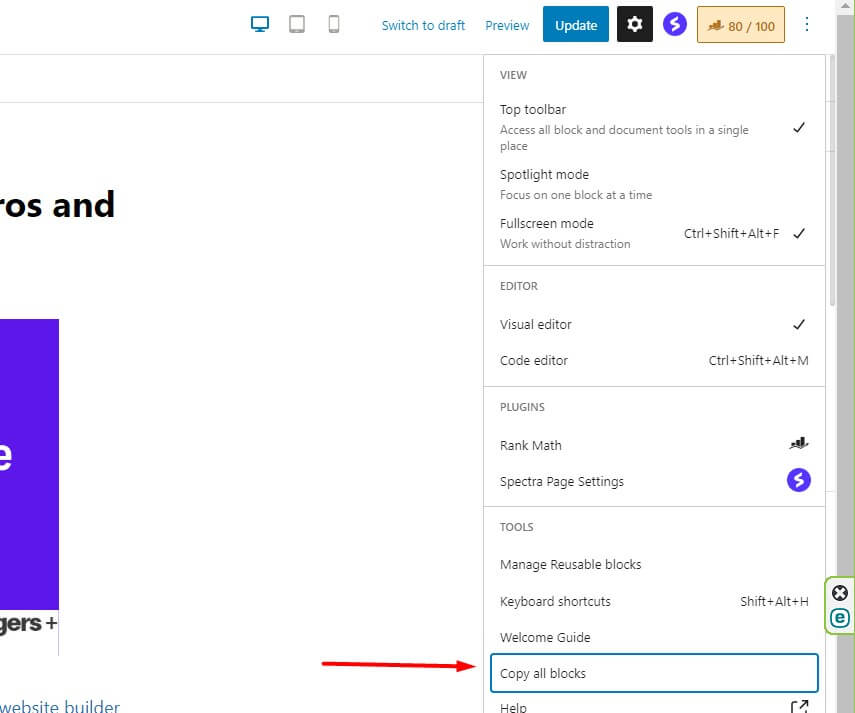
A temporary confirmation notice will appear at the bottom of the screen stating that all blocks have been successfully copied to your system clipboard.
Return to your WordPress administration sidebar. Click Pages and select Add New Page to generate an empty document canvas ready for content insertion.
Place your cursor inside the empty title or initial block area. Press Ctrl+V on Windows or Command+V on Mac to paste the entire page architecture.
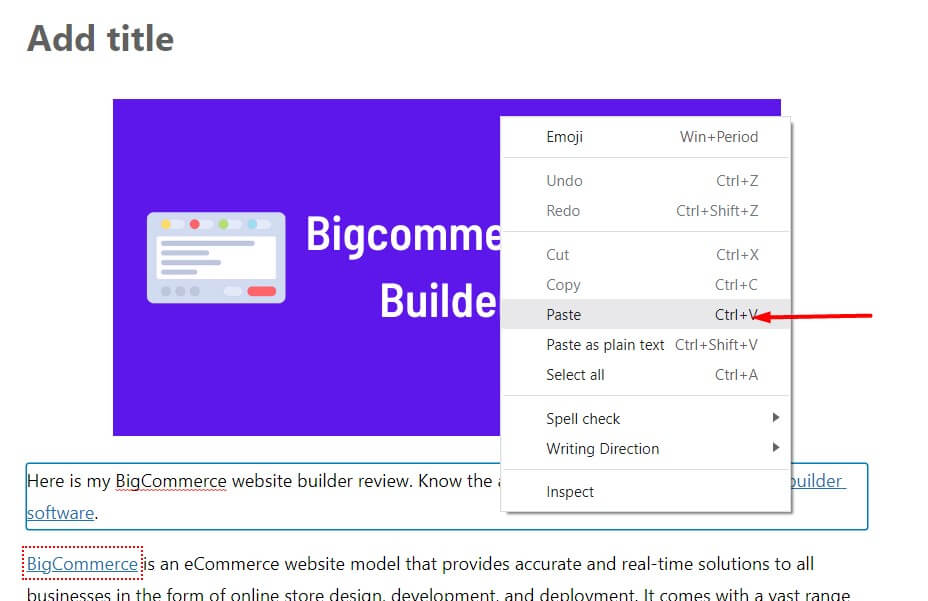
All text blocks, images, buttons, and custom columns will render instantly. You must now add a unique document title and assign custom SEO meta descriptions manually.
Update your target URL slug inside the Page settings panel before hitting the Publish button to avoid accidental duplicate permalink conflicts.
Method 2: Copy Raw HTML Code in the Classic Editor
To copy wordpress page without plugin tools in the classic editor, switch from visual to raw text mode, select all HTML code, and paste it into a blank draft. This preserves shortcodes, inline styles, and media embeds with total accuracy.
Webmasters managing legacy WordPress installations or websites utilizing classic editing workflows can replicate pages directly through markup extraction.
Navigate to Pages and select All Pages. Click Edit beneath the document you wish to duplicate to launch the Classic Editor window.
Locate the editor tabs above the formatting toolbar. Switch from the default Visual display to the Text view mode to inspect the source markup.
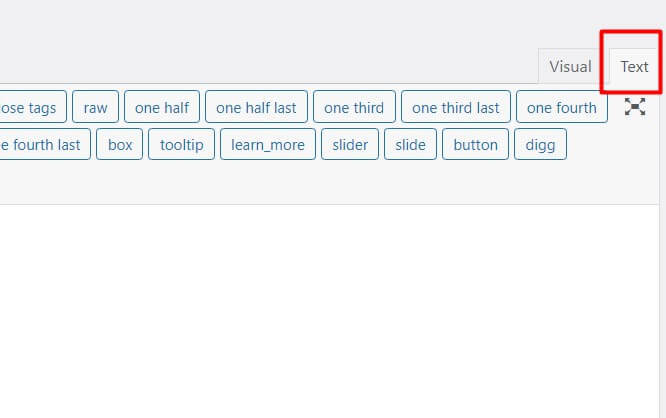
Highlight all source text using Ctrl+A on Windows or Command+A on Mac. Copy the highlighted markup using the Ctrl+C shortcut.
Open Pages and click Add New Page in a separate browser tab. Switch the newly created document directly to the Text tab before pasting.
Paste your copied code into the text area using Ctrl+V. Return to the Visual tab to confirm that all headings, paragraphs, and media elements display correctly.
Configure your page attributes, featured image, and custom fields manually. Save the document as a draft or publish the revised document.
Method 3: Clone Pages Using a Custom PHP Code Snippet
To clone page in wordpress without plugin bloat, administrators can append a lightweight PHP function to their child theme functions.php file or a must-use plugin. This creates an administrative Duplicate link in your post table, generating clean drafts with full taxonomy and meta field preservation.
Custom code execution provides the speed of dedicated software without adding persistent database tables or external script requests to your server environment.
Always insert administrative snippets into a child theme functions.php file or inside a site-specific must-use plugin located in wp-content/mu-plugins.
The following script hooks into post row actions, duplicates the target post object, copies associated post meta fields, and redirects to the newly created draft.
function bloggersneed_duplicate_post_as_draft() {
    global $wpdb;
    if (!(isset($_GET['post']) || isset($_POST['post']) || (isset($_REQUEST['action']) && 'bloggersneed_duplicate_post_as_draft' == $_REQUEST['action']))) {
        wp_die('No post to duplicate provided.');
    }
    if (!isset($_GET['duplicate_nonce']) || !wp_verify_nonce($_GET['duplicate_nonce'], basename(__FILE__))) {
        return;
    }
    $post_id = (isset($_GET['post']) ? absint($_GET['post']) : absint($_POST['post']));
    $post = get_post($post_id);
    $current_user = wp_get_current_user();
    $new_post_author = $current_user->ID;

    if (isset($post) && $post != null) {
        $args = array(
            'comment_status' => $post->comment_status,
            'ping_status'    => $post->ping_status,
            'post_author'    => $new_post_author,
            'post_content'   => $post->post_content,
            'post_excerpt'   => $post->post_excerpt,
            'post_name'      => $post->post_name . '-copy',
            'post_parent'    => $post->post_parent,
            'post_password'  => $post->post_password,
            'post_status'    => 'draft',
            'post_title'     => $post->post_title . ' (Copy)',
            'post_type'      => $post->post_type,
            'to_ping'        => $post->to_ping,
            'menu_order'     => $post->menu_order
        );
        $new_post_id = wp_insert_post($args);
        $taxonomies = get_object_taxonomies($post->post_type);
        foreach ($taxonomies as $taxonomy) {
            $post_terms = wp_get_object_terms($post_id, $taxonomy, array('fields' => 'slugs'));
            wp_set_object_terms($new_post_id, $post_terms, $taxonomy, false);
        }
        $post_meta_infos = $wpdb->get_results("SELECT meta_key, meta_value FROM $wpdb->postmeta WHERE post_id=$post_id");
        if (count($post_meta_infos) != 0) {
            $sql_query = "INSERT INTO $wpdb->postmeta (post_id, meta_key, meta_value) ";
            foreach ($post_meta_infos as $meta_info) {
                $meta_key = $meta_info->meta_key;
                if ($meta_key == '_wp_old_slug') continue;
                $meta_value = addslashes($meta_info->meta_value);
                $sql_query_sel[] = "SELECT $new_post_id, '$meta_key', '$meta_value'";
            }
            $sql_query .= implode(" UNION ALL ", $sql_query_sel);
            $wpdb->query($sql_query);
        }
        wp_redirect(admin_url('post.php?action=edit&post=' . $new_post_id));
        exit;
    }
}
add_action('admin_action_bloggersneed_duplicate_post_as_draft', 'bloggersneed_duplicate_post_as_draft');

function bloggersneed_duplicate_post_link($actions, $post) {
    if (current_user_can('edit_posts')) {
        $actions['duplicate'] = 'Duplicate';
    }
    return $actions;
}
add_filter('page_row_actions', 'bloggersneed_duplicate_post_link', 10, 2);
add_filter('post_row_actions', 'bloggersneed_duplicate_post_link', 10, 2);
Once saved, navigate to your Pages menu. Hovering your mouse cursor over any page title displays a new clickable Duplicate link alongside Edit and Trash options.
Clicking Duplicate instantly creates a fresh draft copy with all custom metadata and redirects your browser window straight into the post editing screen.
Method 4: Template and Synced Block Patterns in Full Site Editing
Modern block themes allow site managers to save entire page sections as synced patterns or template parts. By grouping core layout components into a reusable pattern, administrators can instantly insert structured frameworks into newly generated pages without writing code or manually copying clipboard elements.
Open any existing page containing a layout design you intend to standardize across your publication. Select the primary container block wrapping your main content area.
Click the block options toolbar and select Create pattern. Provide a clear descriptive title and determine whether changes should sync across all connected site instances.
When building a new landing page, launch the block inserter, browse to your Patterns library, and click your saved layout to insert the complete design framework.
Comparison of WordPress Page Duplication Methods
Selecting the ideal page replication technique depends on whether you require one-time content transfers or continuous editorial duplication. Native block copying satisfies occasional drafting needs, whereas custom code hooks and dedicated plugins preserve deep metadata relationships, page hierarchies, and custom fields across high-volume production websites.
The evaluation matrix below benchmarks each duplication strategy across technical difficulty, metadata retention, and execution speed.
| Duplication Method | Skill Level | Meta Retention | Speed | Best Use Case |
|---|---|---|---|---|
| Gutenberg Copy All Blocks | Beginner | Content Only | Instant | Single page layout cloning |
| Classic Editor Text Copy | Beginner | Markup Only | Fast | Legacy HTML content reuse |
| Custom PHP Snippet | Advanced | Full Metadata | 1-Click | Plugin-free admin teams |
| Full Site Patterns | Intermediate | Layout Only | Instant | Consistent brand templates |
| Dedicated Plugins | Beginner | Full Metadata | 1-Click | Bulk editorial operations |
For simple editorial tasks, native block duplication eliminates unnecessary administrative overhead while preventing third-party script conflicts on your production server.
Duplicating Pages Using Dedicated WordPress Plugins
While native methods excel for basic drafting, high-volume websites with intricate custom fields, child hierarchies, and WooCommerce attributes often benefit from established duplication plugins. These utilities clone entire taxonomies, featured images, and revisions with a single administrative click from the dashboard table.
Publishers managing multi-author editorial boards frequently install specialized replication extensions to streamline repetitive layout staging.
The most widely adopted solution across the ecosystem is the Yoast Duplicate Post plugin, offering granular user permission controls and cloning options.
After activating the plugin from the official repository, navigate to Pages and select All Pages in your administrative dashboard.
Hovering your cursor over any document reveals dedicated Clone and New Draft action triggers directly within the row menu.
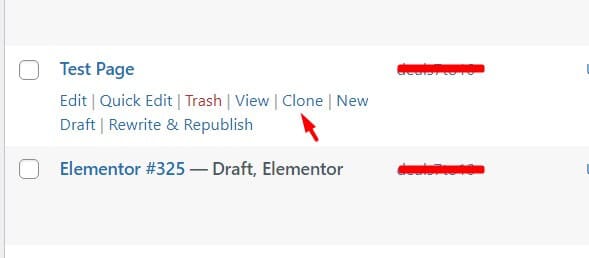
Selecting Clone creates an identical duplicate document in draft status without altering the published live version visible to site visitors.
Why Duplicate a WordPress Post or Page?
Duplicating existing pages accelerates site development by preserving established design layouts, custom CSS classes, and structured block hierarchies. It enables digital marketers to conduct split testing experiments, stage content overhauls in draft status, and maintain structural consistency without rebuilding complex page architectures from scratch.
Professional webmasters rely on page duplication for several strategic operational workflows across growing websites.
Design teams replicate established pillar formats to launch landing pages quickly while adhering to corporate typography and color standards.
Conversion rate specialists duplicate high-performing sales pages to implement targeted A/B testing experiments that isolate headline variations, hero graphics, and call-to-action positions.
Editorial managers clone high-traffic evergreen articles into drafts to prepare major content revamps safely before pushing updates to production.
Administrators also create temporary draft duplicates as emergency backups before executing structural layout changes or code modifications.
SEO Best Practices: Preventing Duplicate Content Penalties
Publishing duplicate pages without proper technical precautions dilutes organic search authority, causes keyword cannibalization, and triggers crawl budget inefficiencies. To safeguard search visibility, administrators must configure self-referential canonical tags, customize URL permalinks, and maintain unpublished draft statuses until textual content is entirely distinct.
Search engine spiders penalize identical or substantially similar pages competing for identical query intent across the same domain.
When cloning landing pages for advertising campaigns, always apply a noindex robots directive in your SEO meta settings to exclude them from organic search indexes.
Always verify that your cloned draft features a distinct URL slug before publication. WordPress automatically appends -2 to identical permalinks, causing user confusion.
Rewrite introductory hooks, subheadings, and meta descriptions completely to provide unique topical information value before publishing the duplicated document.
Frequently Asked Questions
This section addresses critical operational questions regarding WordPress page duplication, metadata preservation, search engine penalties, and plugin-free workflows. Understanding these technical nuances ensures website administrators duplicate content efficiently while maintaining optimal site performance and adhering to strict search engine optimization guidelines.
Can you duplicate a page in WordPress without a plugin?
Yes, you can duplicate a page in WordPress without a plugin by opening your document in the Gutenberg block editor, clicking the options menu, and selecting Copy all blocks. Alternatively, web developers can paste a reusable PHP duplication snippet into their child theme functions.php file.
Both methods eliminate third-party extension dependencies, keeping server resource usage minimal while ensuring clean page reproduction.
Does duplicating a WordPress page copy SEO meta data?
Native block editor copying transfers visual layout elements only without saving SEO titles or meta descriptions. However, custom PHP functions and dedicated duplication plugins copy the complete postmeta database table, preserving Rank Math, Yoast, and custom fields across the duplicated document automatically.
When using the block editor copy tool, you must rewrite meta titles and descriptions manually inside your SEO plugin panel.
Will cloning a WordPress page hurt search engine rankings?
Cloning a page does not harm search performance if the duplicate remains an unpublished draft or receives substantially unique content. However, publishing multiple identical live pages causes keyword cannibalization and indexing penalties unless you apply correct canonical tags or set noindex robots directives.
Always ensure published URLs provide differentiated search intent or point canonical authority back to the primary source page.
How do I duplicate a WooCommerce product page without a plugin?
WooCommerce provides a native duplication tool directly inside the product catalog table. Hovering over any product reveals a Duplicate action button, which instantly creates a draft copy containing SKU data, pricing, inventory parameters, product attributes, and gallery images without third-party extensions.
Store managers can quickly modify titles, inventory numbers, and product photos before publishing the new variation.
Conclusion
Duplicating WordPress pages without plugins maintains lightweight site architecture, protects database hygiene, and speeds up content deployment. Whether copying block hierarchies directly or executing automated PHP hooks, native workflows offer complete administrative control without the security liabilities of external extensions in 2026.
Evaluate your specific operational requirements before selecting a duplication strategy. Occasional template replication functions seamlessly using native Gutenberg block copying.
For extensive enterprise publishing schedules with custom taxonomies, consider maintaining a clean custom PHP hook or a vetted solution like Yoast Duplicate Post.
More WordPress Tips
Explore our collection of hands-on WordPress tutorials to enhance your website functionality, improve page speed, and master layout design. The following technical walkthroughs provide actionable step-by-step instructions for customizing navigation menus, configuring interactive widgets, embedding location maps, and optimizing visual assets across your publication.







I’m Abdullah Prem, a passionate blogger with over 10 years of experience. I created BloggersNeed to produce high-quality, easy-to-understand articles, guides, and tutorials that help people start their blogging journey. Specializing in WordPress, Hosting, Themes, and online money-making strategies, I’ve been featured on leading tech platforms such as Tech.co, Cloudways, Business2Community, Leadpages, GoodFirms, and ShareThis. BloggersNeed.com