
WordPress Category Bulk Assignment Quick Summary
Managing post categories in WordPress allows content creators to organize extensive article archives into coherent topical silos. Learning how to add bulk posts to categories wordpress sites require ensures faster site architecture updates, streamlined editorial workflows, and improved search engine indexing efficiency in November 2026.
Digital publishers regularly manage hundreds of articles requiring precise taxonomy reassignments to improve user experience and topical authority.
Choosing the correct bulk assignment technique depends entirely on total catalog volume, technical access levels, and server resources.
Assigning articles to accurate categories forms the foundation of logical site architecture in WordPress. When websites expand past several dozen posts, assigning taxonomies manually inside individual post edit screens becomes impractical and time-consuming.
Modern content management systems rely on structured taxonomies to generate clean XML sitemaps, display contextual breadcrumb trails, and route search engine crawlers through thematic content clusters.
Publishers establishing new niche hubs can reference our comprehensive guide on how to start a blog on WordPress to establish logical category structures before launching commercial content campaigns.
Integrating verified taxonomy management tools alongside top-rated options from our essential WordPress plugins catalog ensures stable database execution without memory spikes.
The visual overview illustrates how website administrators organize unstructured articles into structured taxonomy silos across modern WordPress installations in November 2026.
Method 1: Native WordPress Bulk Actions Menu (Zero Plugins Required)
To add bulk posts to categories wordpress administrators can use the native Bulk Actions tool inside the All Posts dashboard. This built-in system updates taxonomy terms across dozens of articles simultaneously without requiring external plugins or custom database modifications in November 2026.
The native bulk editor provides an accessible solution for webmasters needing immediate taxonomy updates without installing additional extensions.
Because the feature runs directly within core WordPress software, it introduces zero third-party code vulnerabilities or compatibility conflicts.
The step-by-step procedure follows a straightforward administrative workflow.
- Navigate to the WordPress administrative dashboard and select Posts, then All Posts.
- Expand the Screen Options panel in the top right corner to set the desired batch display limit.
- Check the checkboxes beside individual articles, or select the top header checkbox for all visible posts.
- Choose Edit from the Bulk Actions dropdown menu and click Apply to launch the batch editor.
- Select target categories in the Categories checklist window and click Update to commit changes.
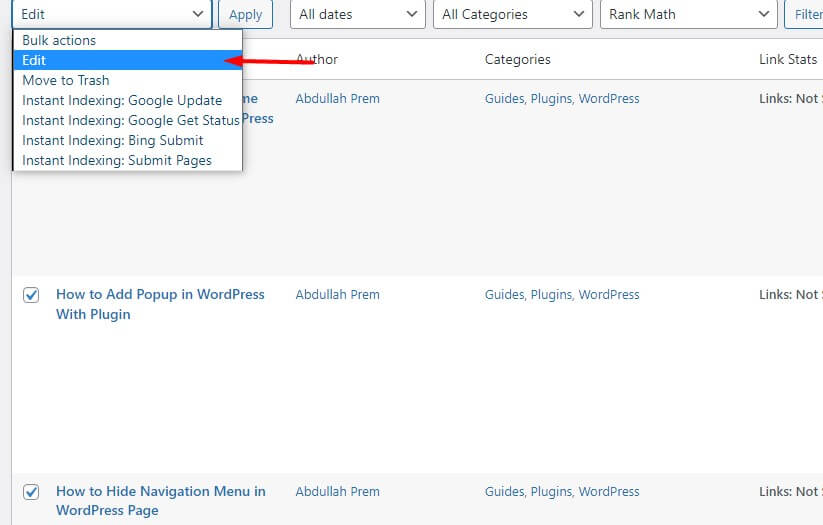
The administrative screenshot displays the native bulk editing modal window where editors select target categories and apply batch changes across multiple selected posts in November 2026.
Configuring Screen Options for Higher Batch Limits
To expand batch capacity beyond the default twenty articles, open the Screen Options tab located in the upper right corner of the admin area. Increase pagination to fifty or one hundred items per page to process larger editorial archives efficiently in November 2026.
By default, WordPress limits the All Posts table to twenty articles per page to conserve shared hosting server resources.
Increasing this pagination number enables content editors to modify substantial post batches without repeatedly paging through archives.
Setting pagination values between fifty and one hundred balances execution speed with PHP memory consumption.
Higher settings such as five hundred posts per page may trigger PHP execution timeouts on shared hosting plans.
Applying Bulk Edit Categories WordPress Actions
To bulk edit categories wordpress records, check the target posts, choose Edit from the Bulk Actions menu, and click Apply. Select your desired taxonomy categories from the selection checklist, retain existing author parameters, and save changes with the blue Update button in November 2026.
The batch editor interface displays several editable fields simultaneously, including categories, tags, author, status, and comments.
When selecting categories in this panel, WordPress appends new categories to selected articles while preserving existing tags.
Leave unrelated fields like author and status set to No Change to avoid unintended metadata modifications.
Clicking Update commits the taxonomy associations across all checked posts through asynchronous background requests.
Method 2: Using the Bulk Move Plugin for Category Reassignments
The free Bulk Move plugin enables WordPress site owners to transfer, swap, or remove post categories in bulk across entire content archives. This automated utility processes thousands of taxonomy associations in a single click without manually editing individual posts in November 2026.
While native bulk editing excels at adding categories, it cannot remove old categories from hundreds of articles simultaneously.
The Bulk Move plugin resolves this limitation by allowing administrators to reassign posts from one specific category to another.
The plugin is lightweight, regularly maintained, and available directly through the official WordPress plugin repository.
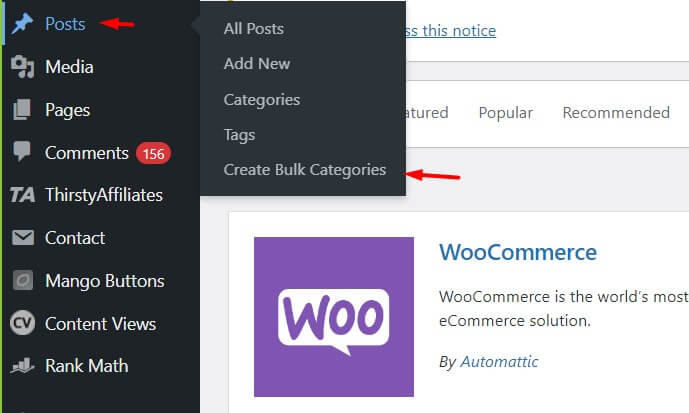
The configuration interface demonstrates how the Bulk Move plugin maps source categories to destination taxonomy terms for automated batch migration in November 2026.
Step-by-Step Setup to Bulk Assign Categories WordPress
To bulk assign categories wordpress posts need during content migrations, access Tools and select Bulk Move from your WordPress administrative panel. Define your source taxonomy, choose the target destination category, select whether to preserve original assignments, and execute the migration in November 2026.
Installing the utility requires visiting Plugins, selecting Add New, and searching for Bulk Move by its official developer.
After activating the extension, open Tools from the admin sidebar and choose Bulk Move to view migration settings.
Select your original source category from the dropdown menu to identify which articles need reassignment.
Select your new destination category, choose whether to remove the original term, and click Bulk Move.
Handling Custom Taxonomies and Child Categories
When managing nested category structures or custom post type taxonomies, category transfer tools maintain parent-child hierarchy relationships seamlessly. Website administrators can reassign subordinate child categories to new parent terms without breaking existing menu navigation or hierarchical breadcrumb structures in November 2026.
Complex WordPress publications frequently utilize subcategories to structure extensive informational libraries into specific topic branches.
Reassigning child categories requires verifying whether parent terms should remain active on individual articles.
Automated migration utilities process both standard blog posts and custom post types registered by theme frameworks.
Reviewing category parent designations before executing bulk migrations ensures consistent hierarchical breadcrumb rendering across search engines.
Method 3: Using WP-CLI Commands for Terminal Users
Terminal users can manage taxonomy terms rapidly by executing WP-CLI commands directly over secure shell connections. Running the wp post term add command updates hundreds of post relationships instantly without consuming web server memory or triggering browser execution timeout limits in November 2026.
WP-CLI represents the official command-line interface for WordPress, offering direct execution access for developers and system administrators.
Executing taxonomy changes via command line bypasses web browser overhead, avoiding web server gateway timeout errors.
Developers managing staging servers or performing automated migrations rely on CLI commands for maximum processing speed.
The terminal interface enables complex filtering based on post status, publication date, and existing taxonomy associations.
Batch Updating Post Terms with WP-CLI Syntax
Executing batch term updates with WP-CLI requires piping filtered post identifiers directly into the term assignment command. Running wp post list with ID formatting piped to xargs updates thousands of database entries cleanly across staging and production server environments in November 2026.
To assign a specific category to multiple articles, administrators execute standard command syntax directly in the server terminal.
For example, running wp post term add 101 category news associates post 101 with the news category term.
To process multiple articles simultaneously, chain the query: wp post list --post_type=post --format=ids | xargs -n 1 -I % wp post term add % category news.
This automated command processes each post sequentially without hitting memory exhaustion ceilings on production servers.
Method 4: Direct MySQL Query Execution in phpMyAdmin (For 10,000+ Posts)
Direct MySQL queries executed within phpMyAdmin provide an enterprise database technique for assigning taxonomy terms to ten thousand posts simultaneously. Running structured INSERT IGNORE statements into the term relationships database table updates post taxonomy records without experiencing server execution timeouts in November 2026.
Enterprise publications housing tens of thousands of articles often encounter script timeout limits when using graphical interfaces.
Executing raw SQL queries inside phpMyAdmin interacts directly with the database engine, finishing complex assignments in milliseconds.
Always create a full database backup before running manual SQL updates on live production environments.
A single incorrect SQL query can damage relationship mappings across entire WordPress taxonomy tables.
WordPress Database Taxonomy Architecture Explained
WordPress organizes taxonomy data across three core relational database tables including wp_terms, wp_term_taxonomy, and wp_term_relationships. The term relationships table links unique post identifiers to corresponding taxonomy IDs, maintaining content associations across categories, post tags, and custom taxonomy structures in November 2026.
Understanding database architecture prevents errors when constructing custom SQL queries for batch taxonomy updates.
The wp_terms table stores the category name and URL slug for every defined taxonomy item.
The wp_term_taxonomy table identifies whether a term functions as a category, tag, or custom taxonomy link.
The wp_term_relationships table connects individual post IDs in object_id to specific term_taxonomy_id records.
Executing the Direct SQL Update Command
To execute direct database term assignments, locate your target category ID within the term taxonomy table and construct an SQL insertion statement. Map post identifiers to your designated taxonomy term using INSERT IGNORE syntax, then recount term totals in WordPress in November 2026.
Locate your target category term_taxonomy_id by browsing the wp_term_taxonomy table in phpMyAdmin.
Execute an SQL query: INSERT IGNORE INTO wp_term_relationships (object_id, term_taxonomy_id, term_order) SELECT ID, 15, 0 FROM wp_posts WHERE post_type = 'post' AND post_status = 'publish';.
Replace the value 15 with your target category taxonomy identifier to map all published posts accurately.
After running the query, visit Posts and click Categories in your admin dashboard to trigger internal taxonomy recount routines.
Critical SEO and Permalink Safeguards During Category Changes
Modifying post category assignments requires careful evaluation of your current WordPress permalink settings before saving batch edits. If your URL structure incorporates the category taxonomy slug, changing categories alters live page addresses, necessitating immediate three-zero-one redirects to prevent broken backlinks in November 2026.
Navigating permalink implications is essential whenever modifying category assignments across established content libraries.
Standard WordPress installations using /%postname%/ experience zero URL modifications when categories change.
However, installations utilizing /%category%/%postname%/ experience complete URL rewrites across all affected posts.
Unplanned URL changes result in instant four-zero-four errors, broken internal links, and loss of search engine rankings.
Managing 301 Redirects for Category URL Rewrites
When permalink structures include category names, altering taxonomy assignments changes published article URLs instantly. Website managers must configure permanent three-zero-one redirects using server configuration rules or redirect plugins to preserve search ranking equity and eliminate visitor four-zero-four errors in November 2026.
Implementing server-level redirection rules through your web server configuration file prevents ranking drops after taxonomy restructuring.
Dedicated redirection plugins automatically log URL changes and create permanent redirect mappings across affected article paths.
Preserving inbound link equity ensures that external backlinks continue passing search authority to newly categorized URLs.
Regularly monitor Google Search Console crawl reports following bulk categorization updates to identify and resolve orphan URLs quickly.
Comparison of Bulk Categorization Methods
Comparing WordPress bulk categorization techniques helps webmasters select the most efficient approach based on technical expertise, hosting infrastructure, and total post volume. Native tools suit moderate catalogs, specialized plugins assist category transfers, while database commands handle enterprise content libraries in November 2026.
Each categorization method offers unique technical advantages depending on catalog scale and operational requirements.
Review the comparative specifications to determine the most effective approach for your website.
| Categorization Method | Recommended Post Volume | Technical Difficulty | Plugin Required? |
|---|---|---|---|
| Native Bulk Edit | 1 to 500 posts | Beginner (No coding) | No plugins needed |
| Bulk Move Plugin | 500 to 5,000 posts | Intermediate (1-click UI) | Free plugin |
| WP-CLI Terminal | 1,000 to 20,000 posts | Advanced (SSH command) | No plugins needed |
| Direct MySQL Query | 10,000+ posts | Expert (SQL execution) | No plugins needed |
Selecting the optimal bulk categorization method ensures smooth administrative execution while eliminating website downtime.
Frequently Asked Questions About WordPress Category Management
WordPress category management often involves technical questions regarding URL stability, tag preservation, and server processing limits. This comprehensive reference answers common operational inquiries to help site owners assign, modify, and restructure taxonomy archives safely without risking organic search visibility in November 2026.
Does bulk adding categories remove my existing post tags?
Bulk adding categories does not remove or alter existing post tags, authors, or publication dates in WordPress. Native bulk editing treats categories as independent taxonomy relationships, appending new category assignments to selected articles while preserving all pre-existing metadata and tag taxonomies in November 2026.
The WordPress database architecture separates categories and post tags into distinct term taxonomy records.
Adding a category via Bulk Actions creates a new relationship entry without modifying existing tag records.
Can a single WordPress post belong to multiple categories?
WordPress allows assigning an individual post to multiple categories across your taxonomy structure. Establishing one primary category per article remains an SEO best practice because it creates predictable breadcrumb paths and prevents duplicate content confusion across search engine crawlers in November 2026.
Assigning excessive categories dilutes topical relevance and creates redundant archive pages across your website.
Modern SEO frameworks recommend designating one primary category while using tags for secondary thematic descriptors.
How many posts can I bulk edit at once in WordPress?
WordPress allows editing up to nine hundred ninety-nine posts at once through the Screen Options panel. Practical performance limits depend on server memory allocation, with batch sizes between one hundred and two hundred posts recommended to avoid PHP script timeouts in November 2026.
Attempting to process more than two hundred articles simultaneously on shared hosting servers may trigger fatal memory errors.
Increasing your PHP memory limit to 256MB or 512MB provides greater stability during high-volume administrative tasks.
Will changing a post category break my live URLs?
Changing a post category breaks live URLs only if your WordPress permalink structure contains the category slug tag. If your permalinks use the postname structure, category changes update taxonomy archives without altering individual article addresses or harming existing inbound links in November 2026.
Check your current URL settings under Settings and Permalinks before executing widespread category modifications.
If your permalink includes the category variable, prepare 301 redirects for all updated articles immediately.
How to assign multiple posts to category WordPress without plugins?
To discover how to assign multiple posts to category wordpress natively, navigate to Posts and open All Posts. Select desired articles using the checkboxes, choose Edit from the Bulk Actions menu, click Apply, select your category, and click Update in November 2026.
This core procedure requires no third-party software, preserving site security and database speed.
The native editor supports assigning one or multiple categories simultaneously across any selected article batch.
Can I bulk remove categories from WordPress posts?
Native WordPress bulk editing appends categories to posts but cannot remove existing category associations automatically. To remove categories in bulk, webmasters must use the Bulk Move plugin or execute direct database queries to delete specific relationship records in November 2026.
Installing the Bulk Move plugin provides a graphical option to strip specific categories across multiple articles.
Advanced administrators can alternatively execute SQL deletion queries within phpMyAdmin to purge obsolete category links.

I’m Abdullah Prem, a passionate blogger with over 10 years of experience. I created BloggersNeed to produce high-quality, easy-to-understand articles, guides, and tutorials that help people start their blogging journey. Specializing in WordPress, Hosting, Themes, and online money-making strategies, I’ve been featured on leading tech platforms such as Tech.co, Cloudways, Business2Community, Leadpages, GoodFirms, and ShareThis. BloggersNeed.com